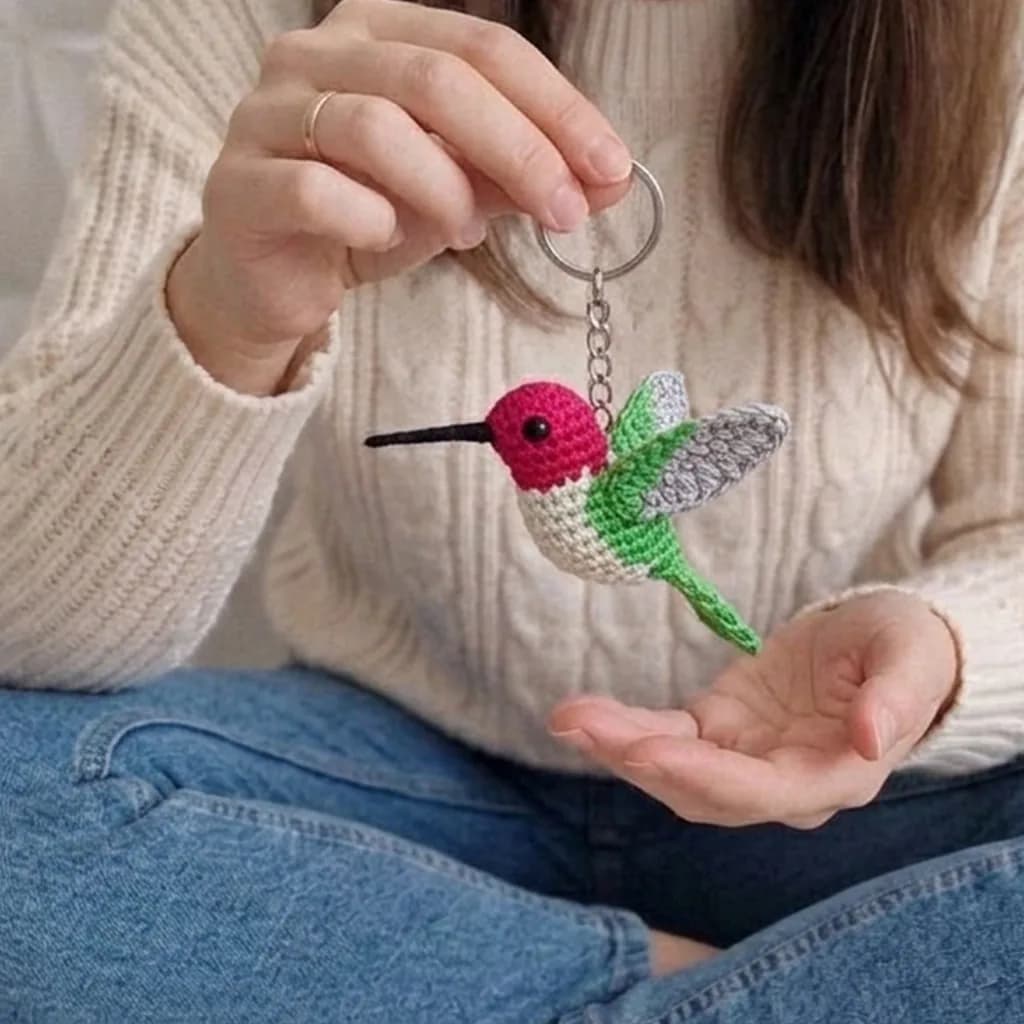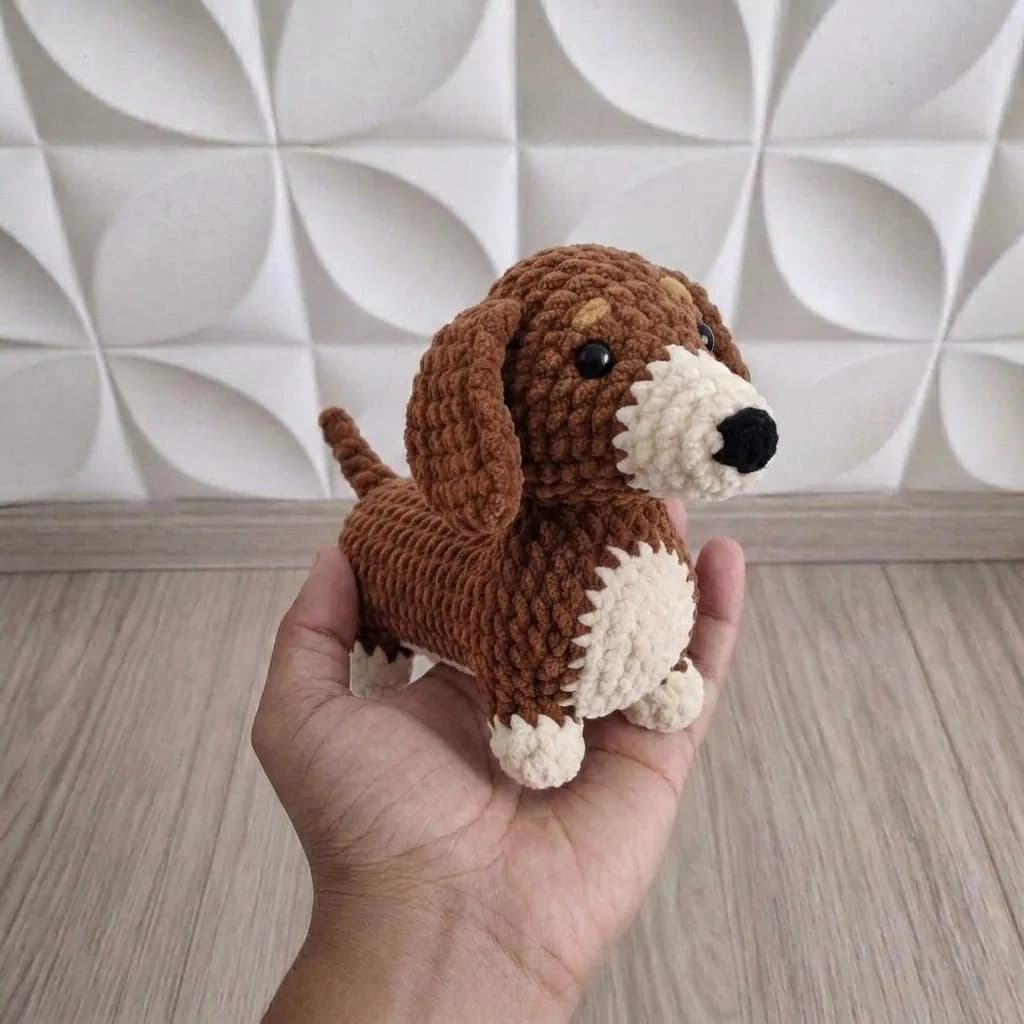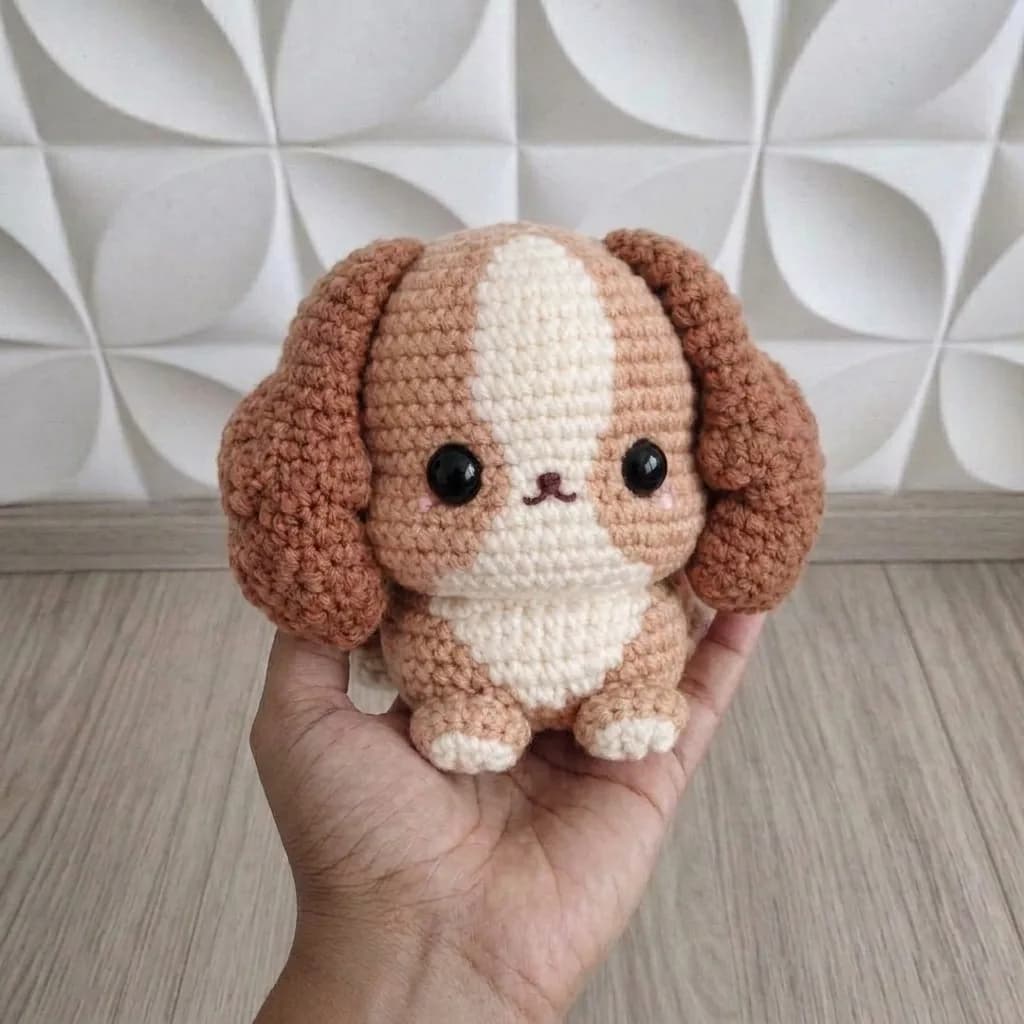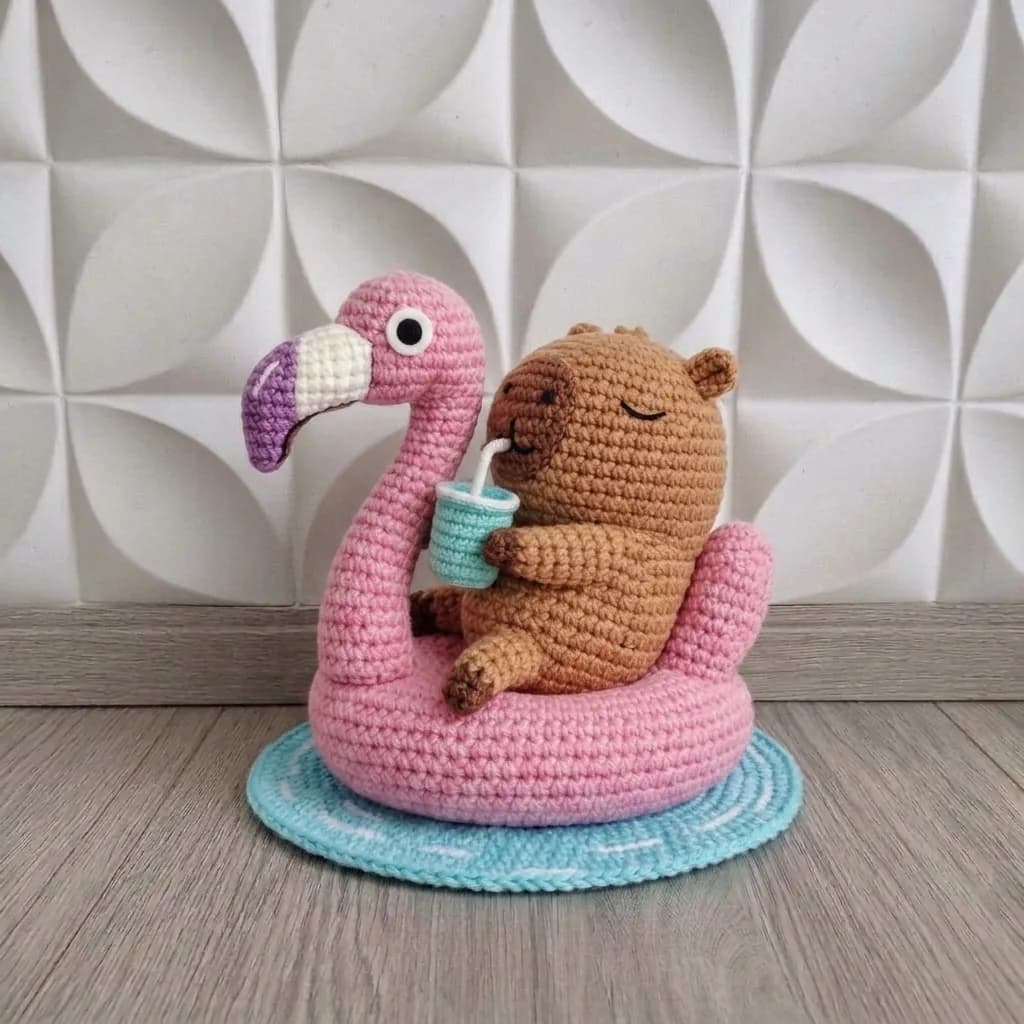
To wash amigurumi, start with the gentlest method that works. Spot clean small marks with a cloth and mild soapy water. For a full clean, hand wash in cool water with a mild detergent, squeeze gently without wringing, roll in a towel and air dry. Machine washing on a cold delicate cycle in a mesh bag is possible only when the yarn, stuffing and every attached part can take it.
Check what the toy is made of
Before any water touches the toy, think about each material in it. The yarn label is the most reliable guide for the yarn; if you made the toy, keep the label or note the fiber.
| Component | What to know before washing |
|---|---|
| Acrylic yarn | Usually tolerates cool washing; heat can flatten or distort it |
| Cotton yarn | Handles washing well; can shrink a little and fades with harsh detergents |
| Wool or wool blends | Can felt and shrink with warm water and agitation; hand wash cool only |
| Plush or chenille yarn | Can shed or mat; hand wash and handle gently |
| Polyester fiberfill | Usually washable; dries well if squeezed out |
| Wool or cotton stuffing | Wool may felt; cotton dries slowly and can stay damp inside |
| Pellets | Fine if fully enclosed in a pouch; loose pellets can escape |
| Safety eyes and noses | Generally fine in water; avoid heat |
| Glued parts, felt, wire, cardboard | Water can loosen glue, bleed colors, rust wire or soften card; spot clean only |
If the toy contains wire, cardboard, glue or anything that should not get wet, stick to spot cleaning.
Method 1: spot cleaning
Most everyday marks come out with spot cleaning, and it is the lowest-risk option.
- Mix a little mild detergent or wool wash into cool water.
- Dip a soft cloth or an old toothbrush into the water and squeeze out the excess.
- Dab or gently rub the marked area, working from the outside of the stain inward.
- Rinse the area with a clean damp cloth to lift the soap.
- Press with a dry towel and let the toy air dry.
Method 2: hand washing
For a toy that needs a proper clean all over:
- Fill a basin with cool or lukewarm water and add a small amount of mild detergent. Avoid hot water, bleach and strong stain removers.
- Submerge the toy and press it gently a few times so the water reaches the stuffing. Let it soak for 10 to 15 minutes.
- Work on marks with your fingers or a soft brush. Avoid rubbing wool hard, since friction plus soap starts felting.
- Rinse in clean cool water, pressing until no more suds come out. Repeat if needed.
- Squeeze, do not wring. Press the water out with your hands. Twisting can distort the shape and stretch the stitches.
- Roll in a towel. Lay the toy on a dry towel, roll it up and press to absorb more water.
Method 3: the washing machine, with care
Some makers machine wash acrylic or cotton toys stuffed with polyester fiberfill. If you choose to:
- Check that every material allows it, including attached parts.
- Put the toy in a mesh laundry bag or a pillowcase tied closed.
- Use a cold, gentle or delicate cycle with mild detergent.
- Add a towel or two to balance the load.
- Skip the tumble dryer; let it air dry instead.
Machine washing is never completely predictable for handmade toys. Spot cleaning or hand washing is the gentler route for a toy that matters to someone.
Drying so the toy keeps its shape
Drying is where most washing problems happen, because a stuffed toy holds water deep inside.
- Reshape while damp. Pat the head round, straighten limbs and ears, and fluff any hair.
- Air dry flat or upright in a warm, airy spot, out of direct strong sun, which can fade colors.
- Turn it every few hours so all sides dry.
- Be patient. A large toy can take a day or more. Squeeze the thickest part before giving it back; it should feel dry all the way through.
- Avoid radiators and dryers. Direct heat can melt acrylic, distort safety eyes and shrink wool.
If you need to speed drying, a fan blowing cool air nearby helps.
Fuzz, pilling and flattened fiber
After washing or heavy use, some yarns pill or look fuzzy. You can trim pills carefully with small scissors or use a fabric shaver on a gentle setting, testing on a hidden area first. Fiberfill that has gone flat inside a toy can sometimes be fluffed by squeezing and massaging the piece; in a toy you made, you can also open a seam, add stuffing and close it again.
Stuffing choices that make washing simpler
If you are making a toy that you know will be washed often, the filling matters as much as the yarn. Polyester fiberfill and cotton or acrylic yarn wash more predictably than wool. Our guide to amigurumi stuffing types compares fillings by how they handle water.
Washing crocheted clothes for toys
Doll and toy outfits are flat pieces, and they wash and dry more like regular knitwear. Hand wash them gently, press out water in a towel and dry them flat, reshaping as you go. If they have lost shape, blocking brings them back; see our article on blocking crochet doll clothes.
Keeping toys cleaner between washes
A few habits reduce how often a full wash is needed. Store shelf toys away from kitchen grease and dust, or in a closed cabinet. For a toy that travels, a small cloth bag keeps it off car floors and out of bags with leaky snacks. Brush off dust now and then with a soft, dry brush, working with the direction of the stitches. If a toy gets wet in the rain, dry it the same way you would after washing, reshaping it while damp, so moisture does not sit inside the stuffing for days.
How often to wash
There is no fixed schedule. Toys that go to bed with a child or travel everywhere need cleaning more often than shelf pieces. Regular spot cleaning keeps a full wash rare, which is better for the shape of the toy.
Planning a toy that will be washed a lot? Choose a design from our amigurumi PDF patterns and make it in a washable yarn with polyester fiberfill.