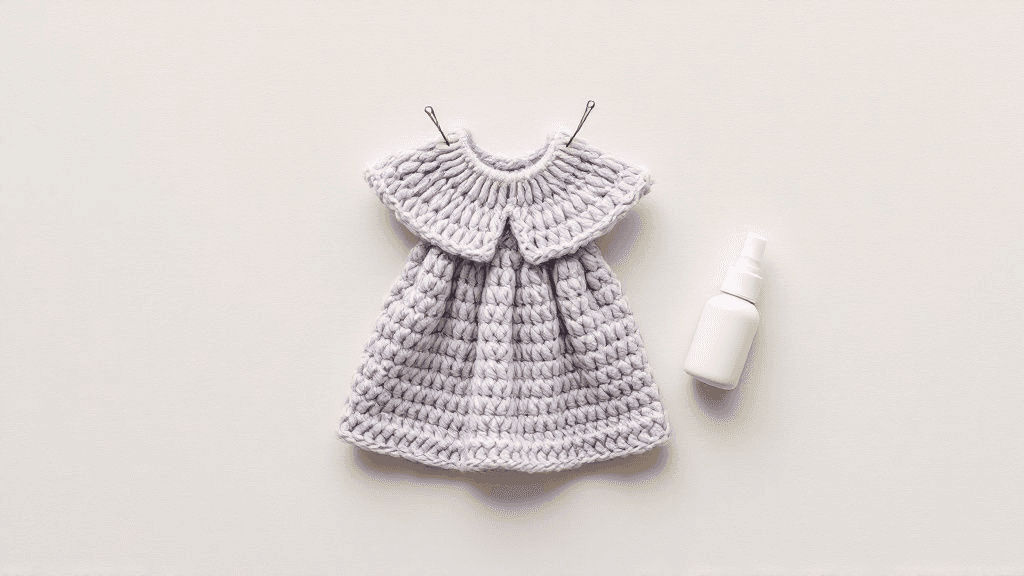
To block crochet, you dampen or steam a finished piece, pin it to the shape and size you want, and let it dry completely before unpinning. Wet blocking suits cotton and wool, spray blocking suits delicate shapes, and steam blocking suits acrylic, with the steam held above the fabric and the iron never pressed on it.
What blocking does
Crochet stitches are loops that settle wherever your tension left them. Fresh off the hook, a flat piece often curls at the edges, a collar may twist and a doll skirt may lean to one side. Blocking relaxes the fibers with moisture or heat so the stitches even out and stay in the shape you pin them to.
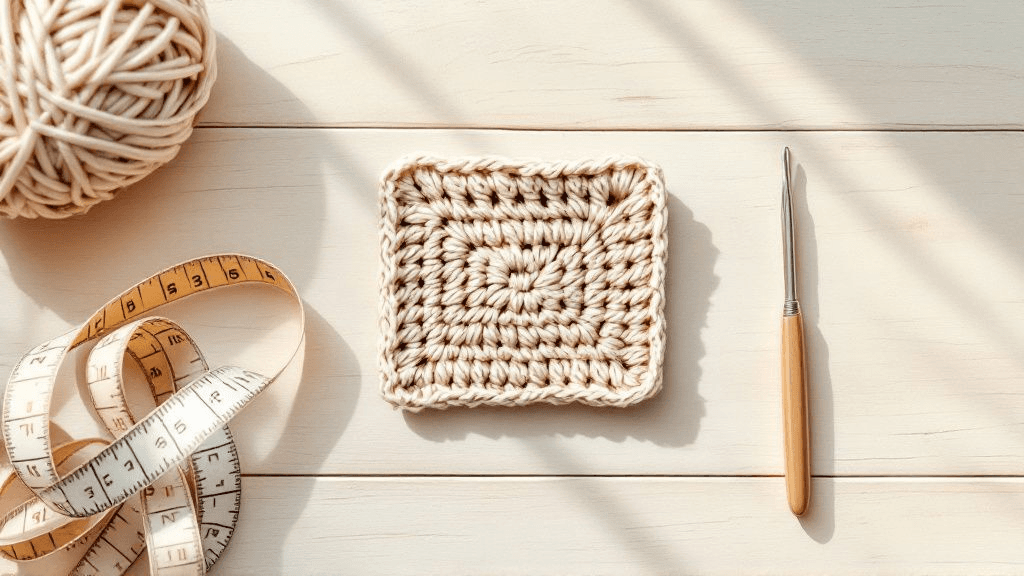
For doll clothes and other flat pieces, blocking makes a visible difference: edges lie flat, lace and shell stitches open up, and two sleeves or two shoes can be set to the same size.
What to block and what not to block
| Piece | Block it? | Why |
|---|---|---|
| Doll dresses, skirts, tops | Yes | Edges lie flat and the garment hangs evenly |
| Collars, bibs, scarves for toys | Yes | Stops curling and opens stitch patterns |
| Flat appliqués and patches | Yes | Easier to sew on neatly |
| Hats and booties for dolls | Lightly | Shape over a small form while drying |
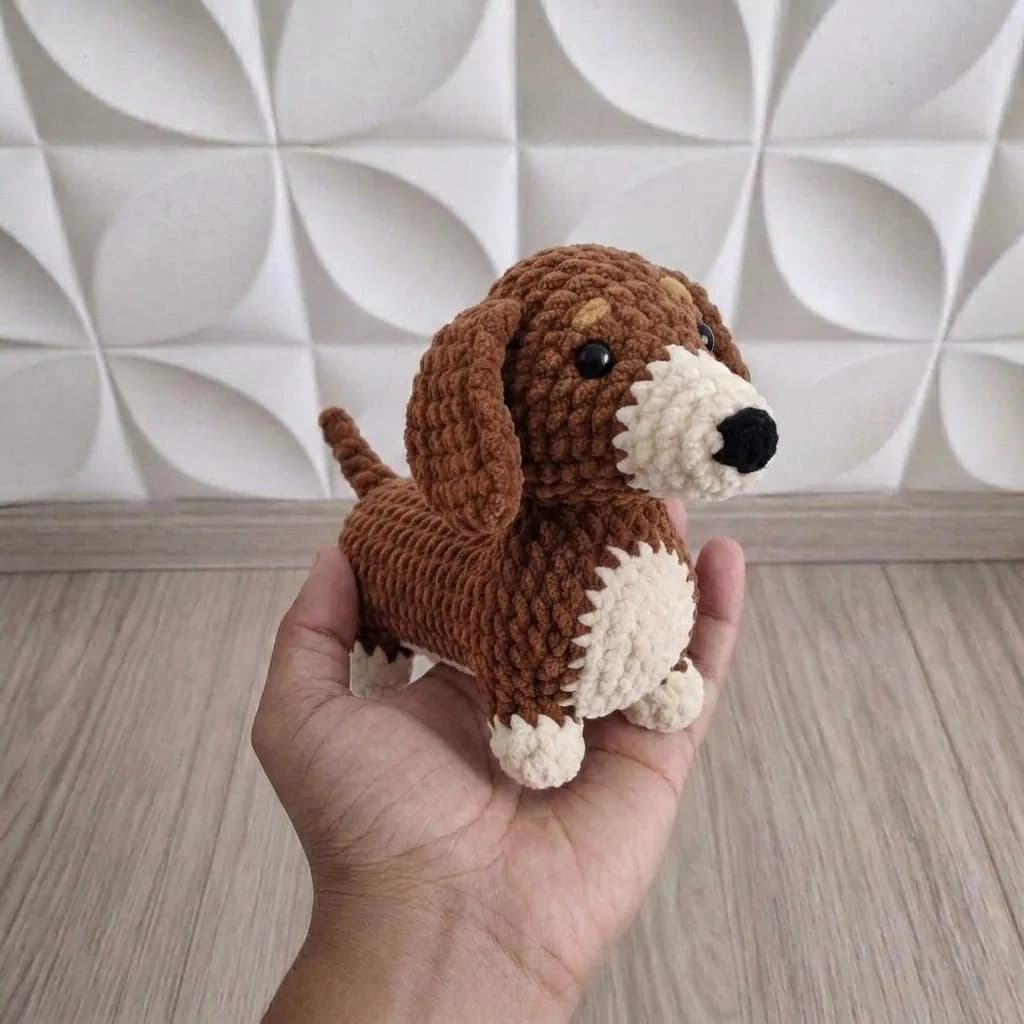
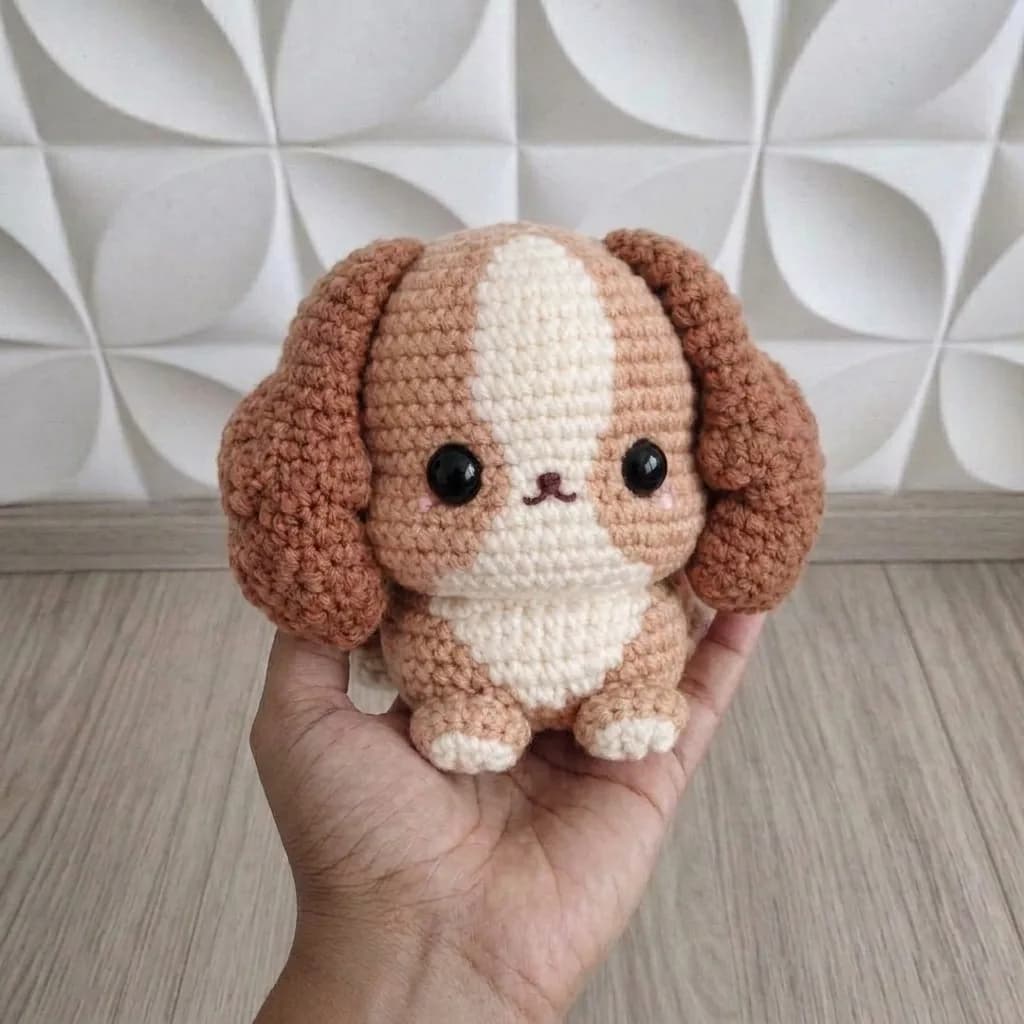
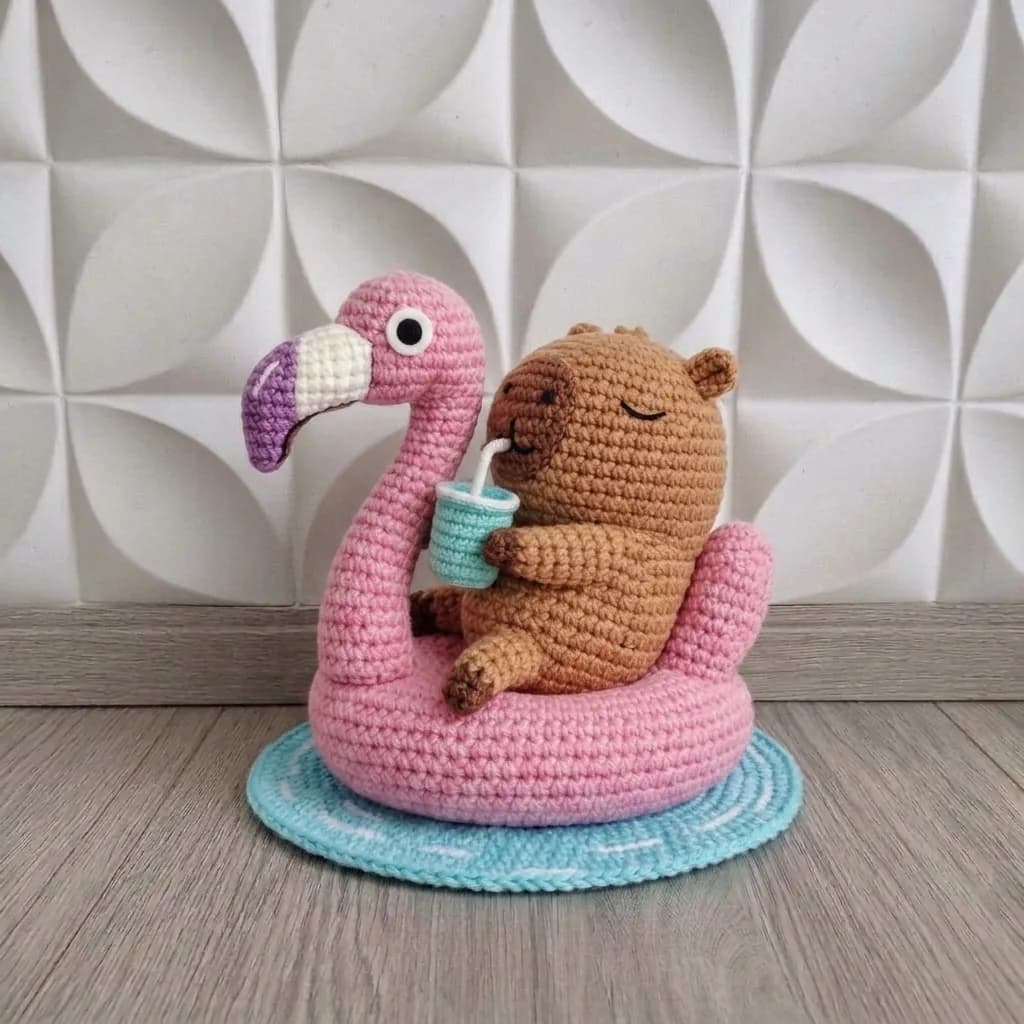
| Stuffed amigurumi | No | Moisture soaks the stuffing; shape it by hand instead |
| Small unstuffed ears or wings | Rarely | Shape with your fingers; a light mist is enough |
Stuffed toys are shaped by stuffing and sewing, not by blocking. If a finished toy needs cleaning, see our guide on washing amigurumi.
Choosing a method by fiber
Always read the yarn label first. It tells you the fiber and the care instructions, and those decide which method is appropriate.
Wet blocking: cotton and wool
- Soak the piece in cool water until it is fully wet.
- Squeeze out the water gently; do not wring or twist.
- Roll it in a clean towel and press to remove more water.
- Lay it flat on a blocking mat or folded towel, shape it and pin it.
- Leave it until it is completely dry, which can take a day or more.
Wet blocking gives the strongest result on natural fibers, and it is the usual choice for cotton doll clothes.
Spray blocking: delicate shapes
Pin the dry piece to shape first, then mist it evenly with water from a spray bottle until it is damp but not soaked. Pat the stitches into place with your fingers and leave it to dry. Spray blocking is gentle and good for small pieces you do not want to stretch.
Steam blocking: acrylic and blends
Pin the piece to shape on a heat-safe surface. Hold a steamer or steam iron a short distance above the fabric and let the steam pass into the stitches, moving slowly and evenly. Do not let the iron touch the yarn. Acrylic softens and can melt with direct heat, and a pressed acrylic piece goes limp and shiny for good. Let the piece cool and dry fully before removing the pins.
Steam changes acrylic permanently, so test on a swatch first and use it only as much as needed. Wet and spray blocking can also be used on acrylic for a gentler result, though many crocheters find the effect less lasting than steam. Blended yarns sit in between, so let the fiber with the most care restrictions on the label decide the method.
Tools for blocking small pieces
You do not need special equipment for doll-size garments.
- A flat surface you can pin into: interlocking foam mats, a folded towel on an ironing board, or a corkboard covered with a towel.
- Rustproof pins: stainless steel pins or T-pins, so no rust marks the yarn.
- A ruler or tape measure to set the size.
- A spray bottle for spray blocking.
- Small forms for three-dimensional items, such as a cardboard tube wrapped in plastic for a doll hat or a rolled washcloth for a sleeve.
Pinning doll clothes to size
The aim is to match the measurements your pattern gives, or the measurements of the toy the garment is for.
- Lay the garment flat, right side up.
- Measure the width across the chest and the length, and compare with your target.
- Pin the corners first, then the middle of each edge, then fill in between, about every 2 cm on small pieces.
- For lace or shell edges, pin each point or scallop so the pattern opens evenly.
- Make sure pairs, like two sleeves or two shoes, are pinned to the same measurement.
Do not stretch a garment far beyond its size. Blocking can coax a piece a little larger or flatter, but it cannot fix a garment that is much too small. If clothes do not fit, the answer is usually in the gauge or the pattern adjustments, which our guide to making crochet doll clothes fit covers.
Blocking after assembly
Many doll garments are sewn or crocheted together from pieces. You can block the pieces flat before assembly, which makes seams easier to sew, or block the finished garment over a form. For a skirt or dress, a cardboard tube or a rolled towel close to the toy's size works well: slip the garment on, mist or steam it, and leave it to dry in shape.
If the garment has buttons, snaps or other fastenings, attach them after blocking so they do not get wet and so you can position them on the final shape. Keep in mind that buttons and snaps are small parts; on clothes for a toy meant for a young child, sewn-in closures or ties are often a better choice.
Common blocking problems
| Problem | Likely cause | Fix |
|---|---|---|
| Edges curl again after drying | Unpinned while still damp | Re-block and leave pinned longer |
| Acrylic piece lost its texture | Iron pressed directly or too much steam | Cannot be undone; steam a new piece less |
| Rust or marks on yarn | Ordinary pins | Use stainless steel pins |
| Garment stretched too big | Pinned beyond its measurements | Re-wet and pin to the correct size |
| Shapes uneven | Edges pinned too far apart | Pin more closely along every edge |
Blocking takes a little patience, but it is often what makes a handmade doll outfit look finished. If you are making an outfit for a toy from our amigurumi PDF patterns, give the flat garment pieces a light blocking before you sew them together.