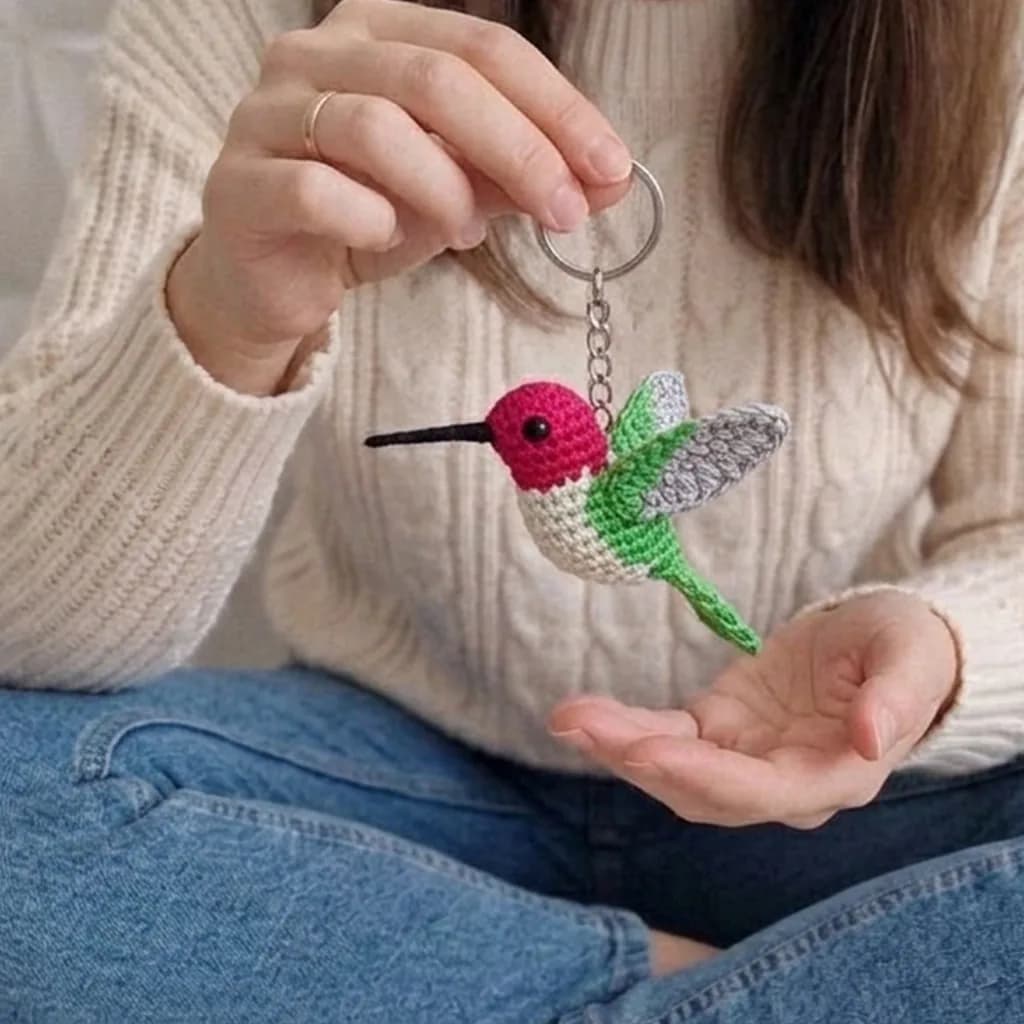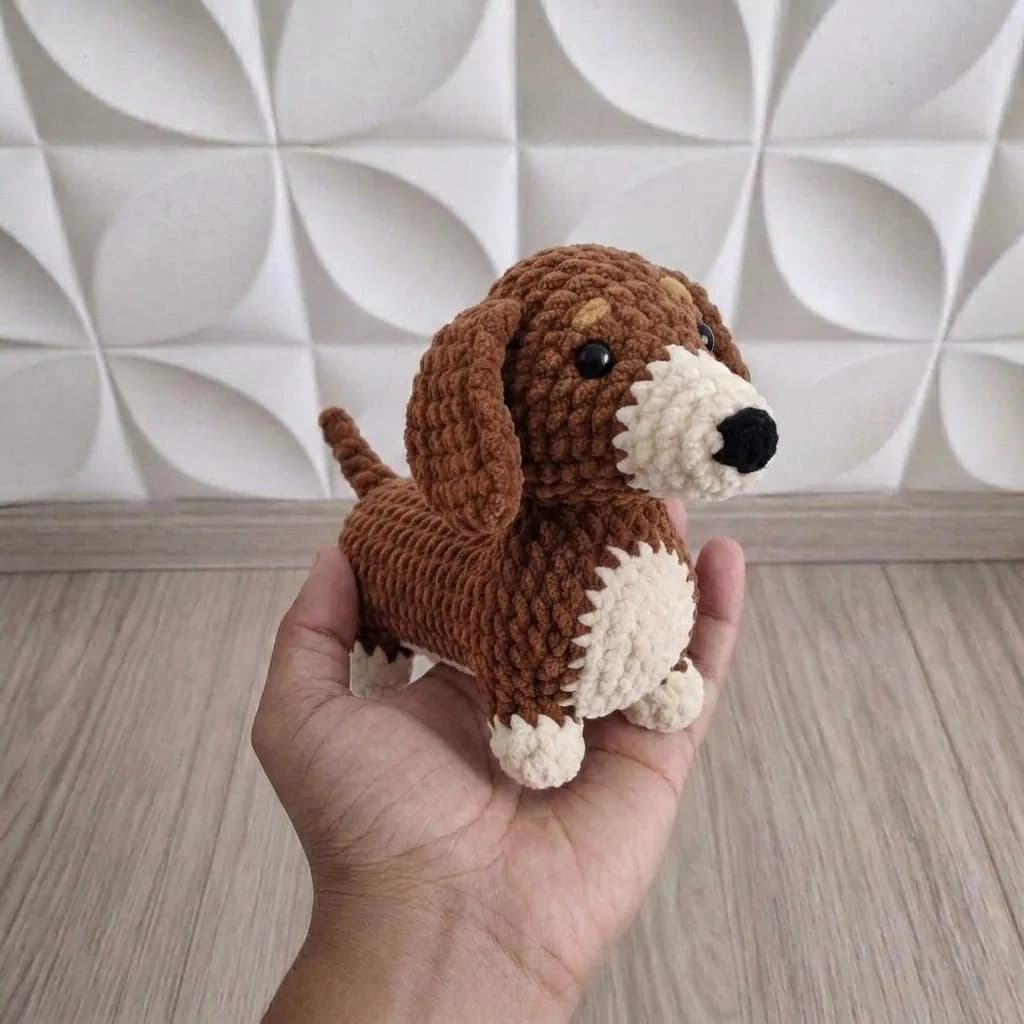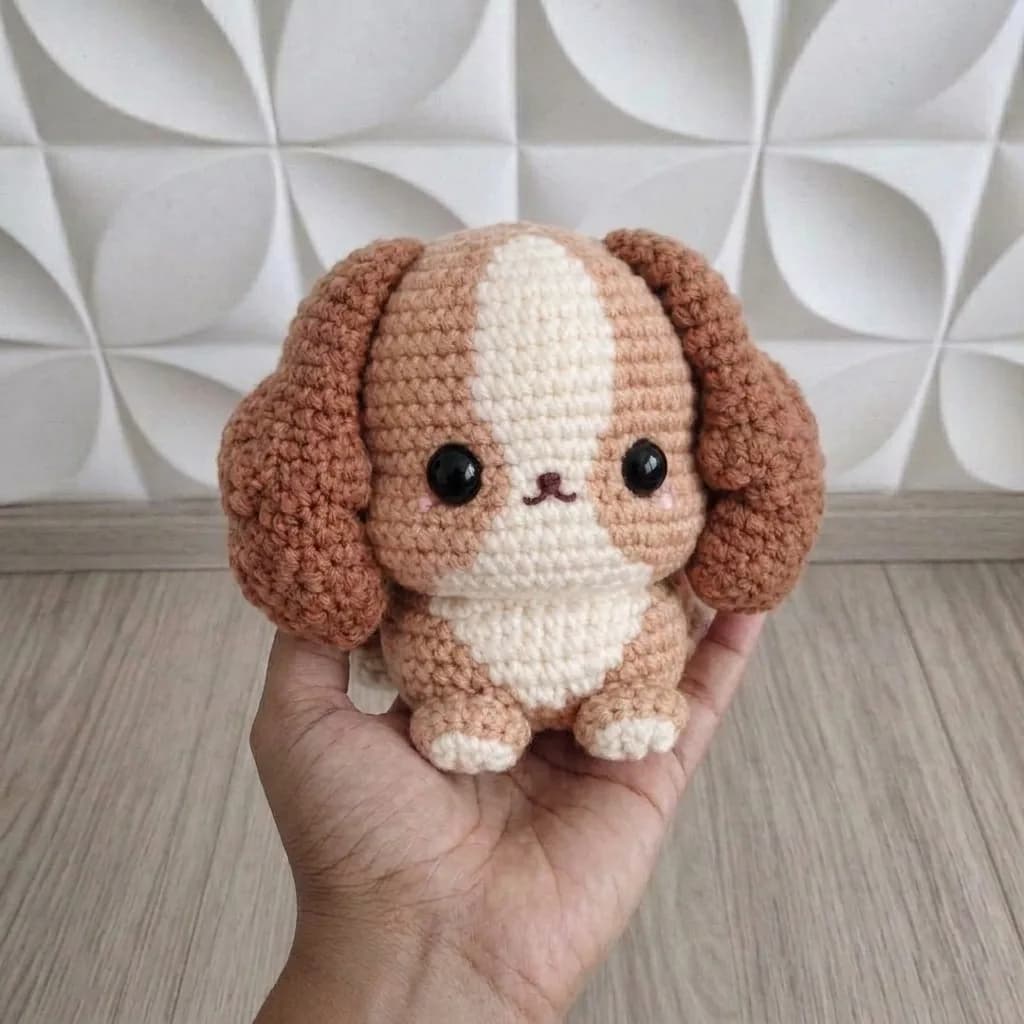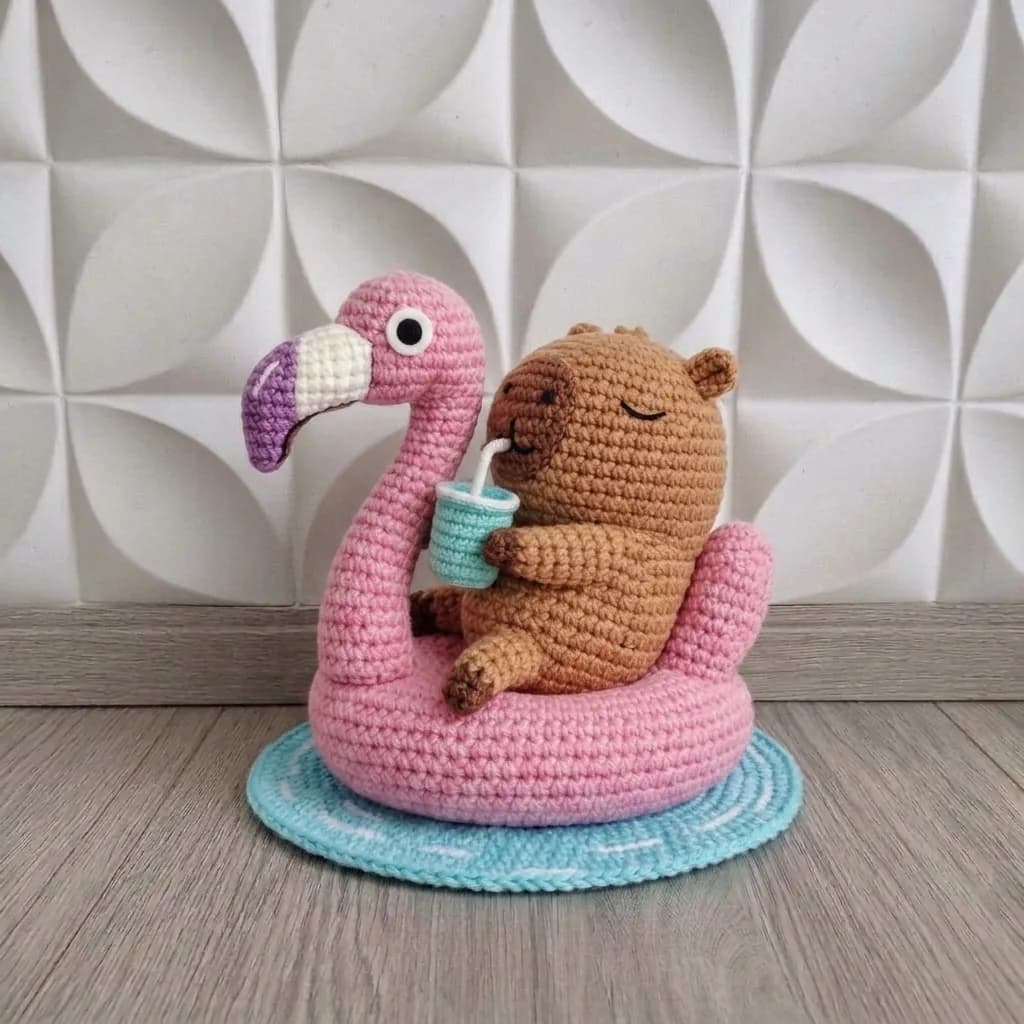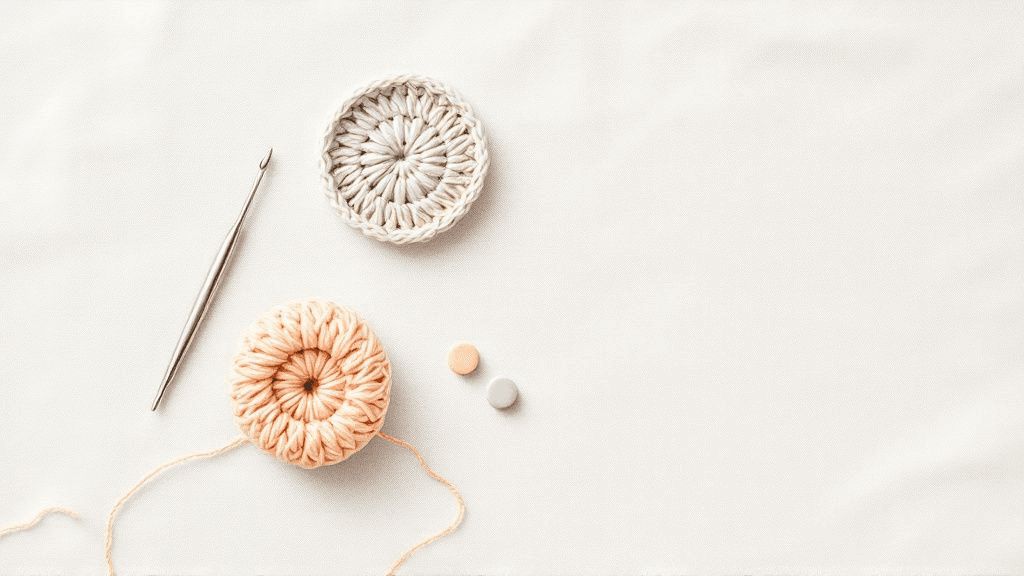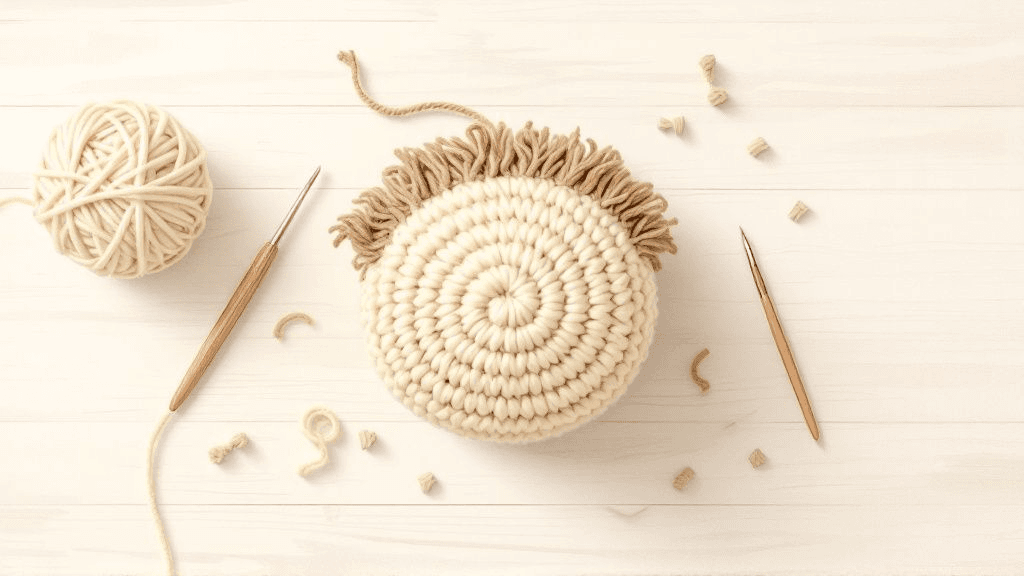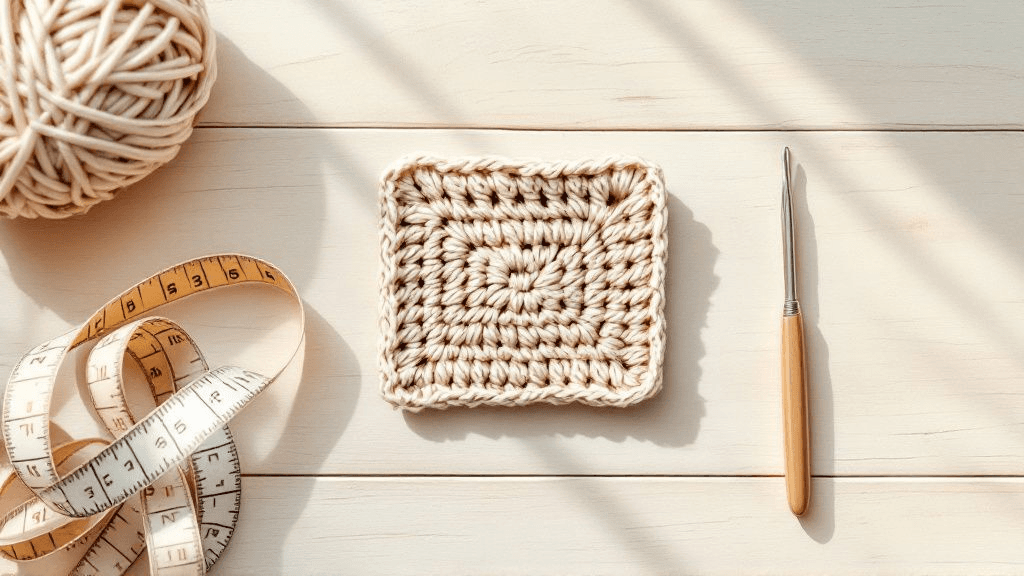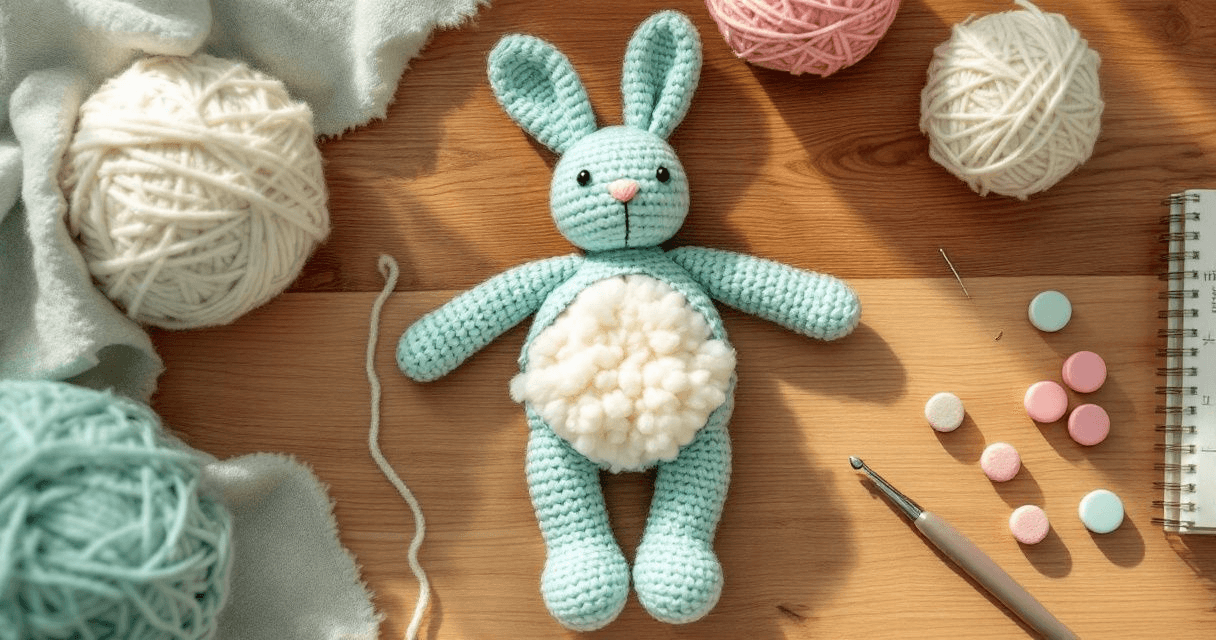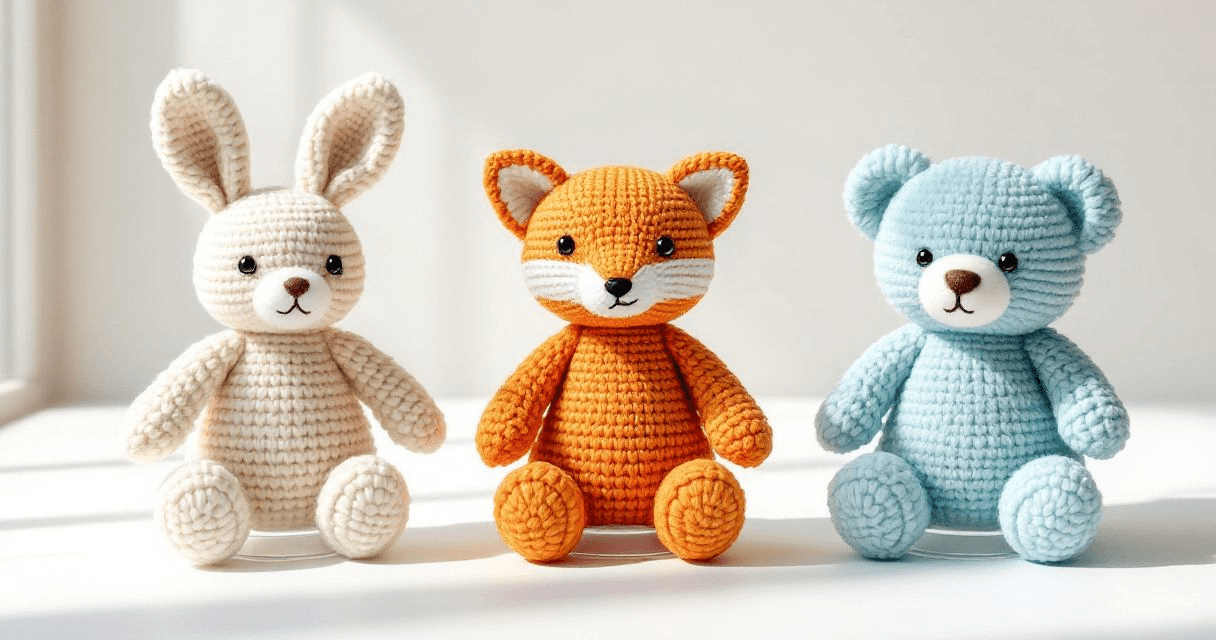
For amigurumi, cotton is a good choice for most people: it holds crisp stitches and keeps its shape. Acrylic is softer on the hands and easy to wash, so it suits toys that will be played with. Plush, chenille and velvet yarns make cuddly toys, but the stitches are harder to see. Match the yarn to the toy.
Yarn weights explained (lace to super bulky)
Yarn weight means thickness, not how heavy the ball is. Many labels use the Craft Yarn Council's numbers from 0 to 7, and most amigurumi is made with weights 2 to 4. Toys are worked as a tight fabric so the stuffing does not show, so most makers use a hook smaller than the yarn label suggests.
- Lace and crochet thread (0): very fine. Used for tiny toys and small details, but slow to work.
- Fingering and sock yarn (1): small toys with neat, fine stitches.
- Sport (2) and DK (3): the common middle ground. Easy to count rounds, and it works up at a comfortable pace.
- Worsted and aran (4): bigger toys that grow quickly. Forgiving for beginners.
- Chunky (5), super bulky (6) and jumbo (7): large, huggable toys with fewer rounds to work. Many plush and chenille yarns sit here.
If you are not sure where to start, pick one weight and stay with it while you learn.
Cotton: crisp stitches, little stretch
Cotton has almost no stretch, and that is exactly what makes it so useful for toys. The fabric holds its shape, the stitches stay even, and every round is easy to see and count. Faces and small details come out sharp, which matters when a toy's character lives in its eyes and nose.
The trade-offs are real too. Cotton feels firmer than wool or acrylic, it can be harder on your hands during a long session, and some cotton yarns split while you work. A cotton and acrylic blend softens the feel and reduces splitting while keeping most of the stitch definition.
Choose cotton when you want a toy that stands up on its own, keeps its shape with use, and shows clean detail, such as an animal with stripes or a carefully embroidered face.
Acrylic: soft, cheap, washable
Acrylic is the practical everyday choice. It is soft, inexpensive, widely available, and it takes colour well, so you can match almost any shade a pattern calls for. Most acrylic yarns are easy to care for, so a toy can be used properly instead of sitting on a shelf.
What you give up is definition. Acrylic has more give than cotton, the surface can fuzz or pill over time, and stitches look slightly softer and less crisp. It also squeaks on the hook now and then, which is harmless but noticeable.
Acrylic suits bigger, squishier toys and anything that will be hugged, dragged around and washed. Blend it with cotton if you want some of both: a little stretch for comfort, a little firmness for shape. A monkey like Alan the Monkey is the kind of toy where a soft, washable yarn makes sense.
Plush / chenille / velvet: cuddly, hard to see stitches
Plush, chenille and velvet yarns are thick, fluffy and lovely to touch. They turn a simple shape into something that feels like a shop-bought soft toy, and the finished fabric hides small mistakes. That same pile is the problem: you often cannot see your stitches clearly, so counting rounds and finding the next stitch takes practice.
Tips that help:
- Start with the hook the pattern names. These yarns are usually worked with a larger hook than smooth DK or worsted, because a very small hook is hard to pull through the pile.
- Mark the first stitch of every round. With plush yarn, a marker is not optional.
- Work by feel as well as by sight, and keep your tension steady.
- Expect a little shedding while you work, and secure ends well, because some chenille yarns can slip out of their stitches.
- Use simple shapes for your first plush project, then move on to more detailed ones.
Plush yarn shines on cuddly animals with few details. The Mimi Bunny plush crochet toy is the sort of pattern that suits it, and a set like 3 in 1 Amigurumi Plush Babies with Clothes gives you small shapes to practise on before you commit to a big toy.
Choosing yarn for baby toys
For a toy that will go to a baby, softness and easy care come first. Plush and soft acrylic yarns feel gentle, and cotton is a good choice when you want a toy that keeps its shape through repeated handling.
- Read the yarn label and follow its washing advice rather than assuming every yarn behaves the same way.
- Work tightly enough that the stuffing stays inside, and stuff firmly rather than under-filling.
- Embroider the eyes and mouth with yarn instead of using plastic safety eyes on a toy for a baby or a child under three.
- Avoid very loose loops and long loose ends that small fingers can catch.
- Skip fuzzy yarns that shed heavily if the toy is going to be chewed.
Substituting yarn and what changes in the finished size
You can swap yarn in almost any pattern, but the finished size will change. The stitch count in the pattern stays the same, so the toy grows or shrinks with the thickness of your yarn. Going up one weight with a matching hook can turn a small toy into a much bigger one.
- Stick to the same weight if you want the size shown in the pattern. Switch fibre freely, for example cotton to acrylic, and the size stays close.
- If you change weight, change hook size with it, then check the fabric. It should be dense enough that you cannot see the stuffing through it.
- Work a few rounds and measure across. Compare that with the pattern's early rounds to see how far off you are.
- Adjust the amount of stuffing to suit the new size, and check that limbs and ears still look in proportion.
- Remember that details change too. A thicker yarn makes embroidered eyes and noses chunkier, so keep them smaller than you think you need.
Conclusion
Cotton for crisp shape and clean detail, acrylic for soft, easy-care toys, and plush for cuddliness even though the stitches are harder to see. Pick the fibre that matches how the toy will be used, keep your fabric tight, and browse the amigurumi pattern collection for a toy to try it on.