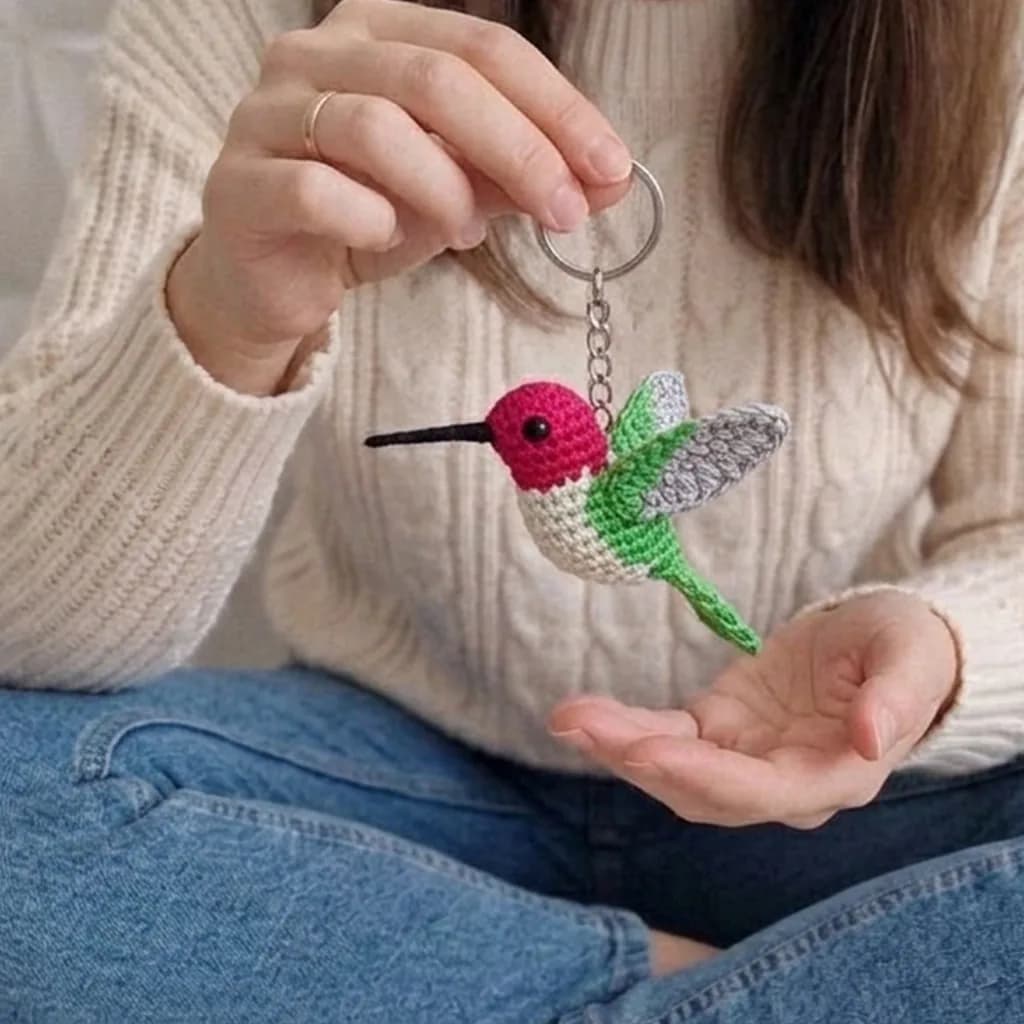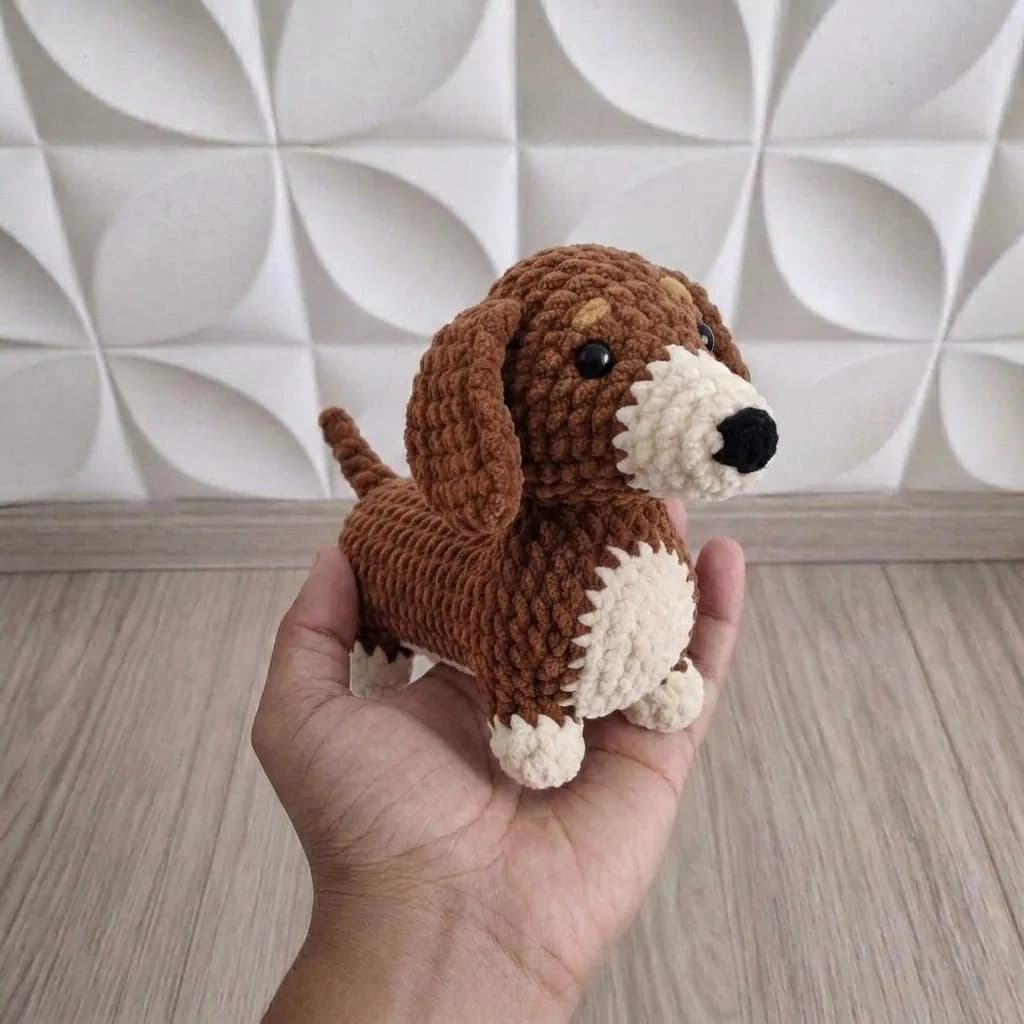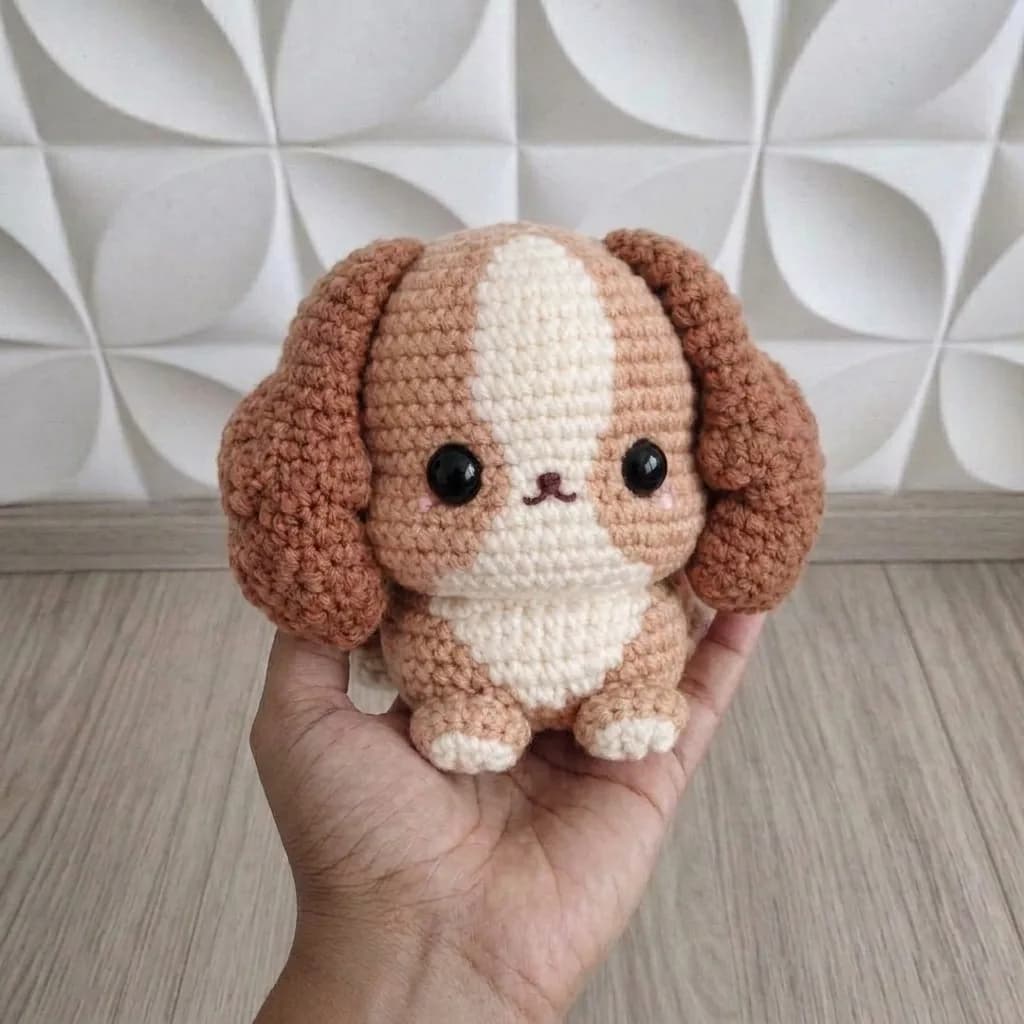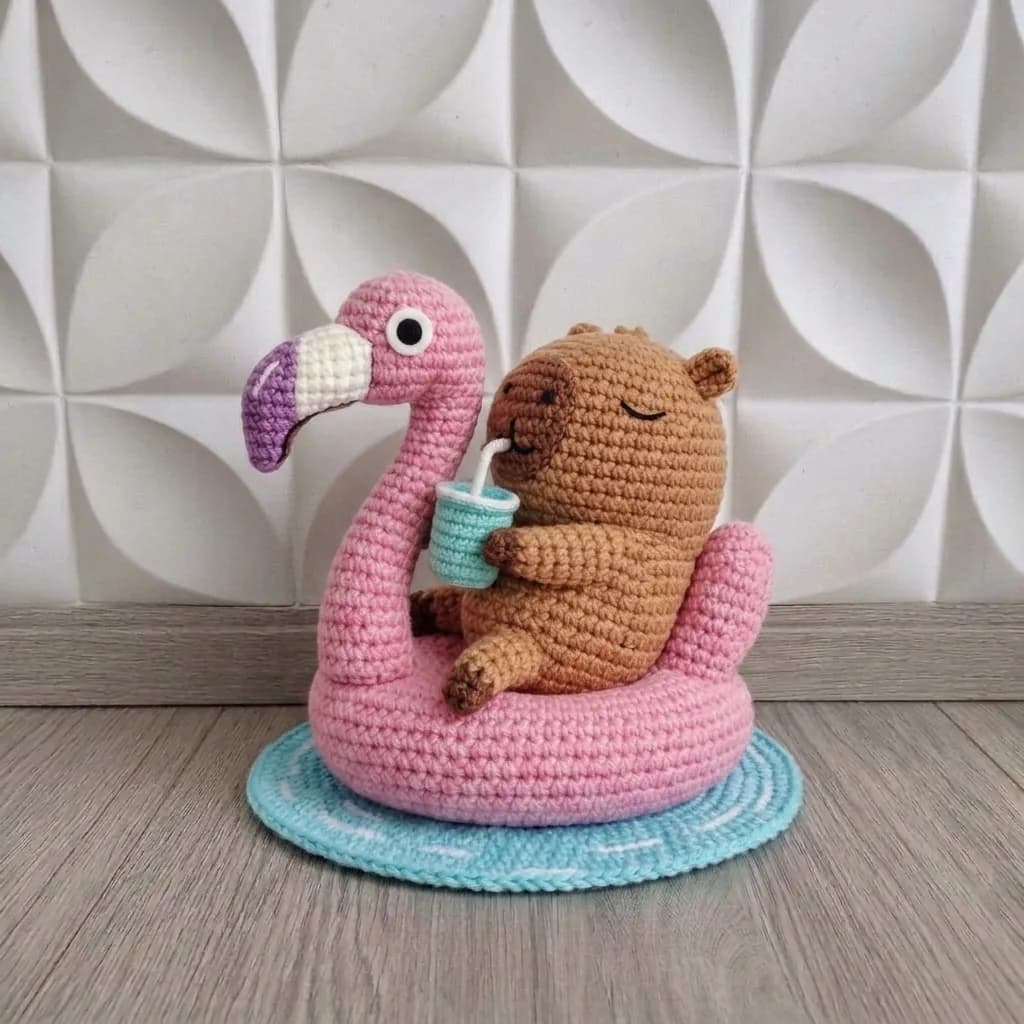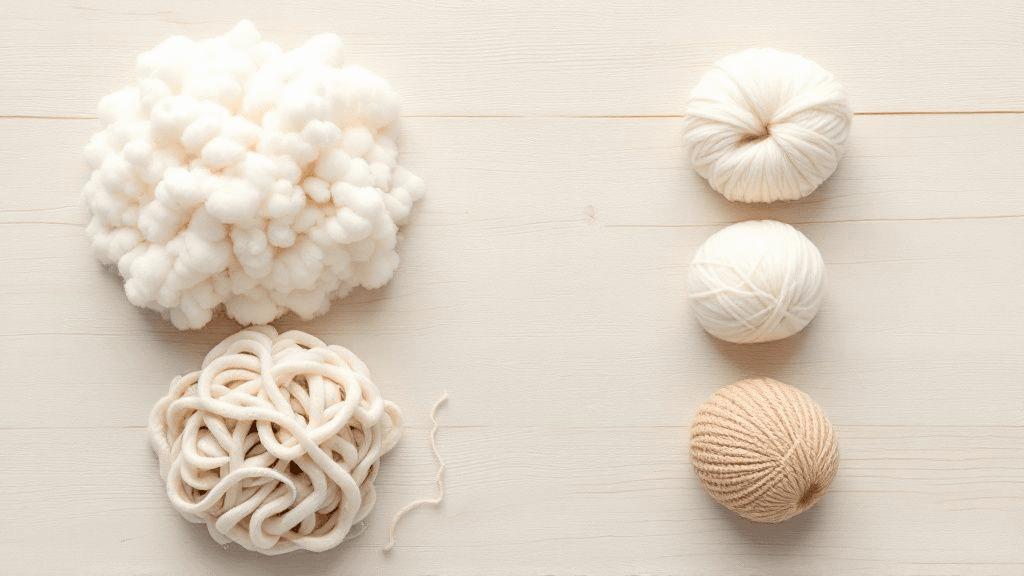
For most projects, stuff amigurumi with polyester fiberfill: it is light, springy, holds its shape and survives washing. Wool stuffing gives a firmer, heavier feel, cotton is dense and slow to dry, and yarn scraps can work for tiny parts. Plastic pellets add weight for sitting or standing but belong in a closed inner bag and are not suitable for young children's toys.
What a good filling does
Stuffing has three jobs in amigurumi. It gives the toy its shape, pushing the crochet fabric out so curves look round. It sets the feel, from squishy to firm. And it affects care, because some fillings dry in good time and keep their loft after washing while others clump or shrink.
Before choosing, think about who the toy is for and how it will be used. A bedtime toy for a child, a decorative shelf piece and a pincushion-firm keyring have different needs.
The common fillings compared
| Filling | Feel | Weight | Washing | Good for | Drawbacks |
|---|---|---|---|---|---|
| Polyester fiberfill | Soft, springy | Light | Usually washable, dries well | Almost any toy | Can look lumpy if pushed in large wads |
| Wool stuffing (roving or batts) | Firm, dense, warm | Medium | Can felt and shrink with heat and agitation | Small firm pieces, natural-fiber projects | Not for machine washing; some people avoid wool |
| Cotton stuffing | Dense, slightly heavy | Medium to heavy | Slow to dry; can clump | Natural-fiber toys meant to be firm | Mildew risk if not dried fully |
| Yarn scraps | Firm, can be uneven | Varies | Same as the yarn | Tiny parts, ends of a project | Colors can show through; lumps |
| Plastic pellets (poly pellets) | Heavy, shifting | Heavy | Washable in their bag | Weighting a base | Small parts; must be bagged; not for young children |
Polyester fiberfill: the default choice
Polyester fiberfill is what most amigurumi designers use, and most patterns simply say "fiberfill" or "stuffing". It is sold in bags of fluffy fiber, and the quality varies: some fills are silky and spread evenly, others are coarse and clump. A good test in the shop, if you can, is to pull a small tuft apart; even, springy fiber gives a smoother finish.
How to use it well
- Pull the fiber apart into small, fluffy tufts before stuffing rather than pushing in a dense wad.
- Fill the far end first, then work toward the opening.
- Use the back of your hook, a chopstick or a stuffing tool to guide fiber into narrow parts.
- Stuff firmly for most toys; amigurumi fabric stretches, and a lightly filled piece tends to sag over time.
Wool stuffing
Wool roving or carded wool batting gives a dense, slightly heavy toy that feels substantial in the hand. Many makers who use natural yarns prefer to keep the filling natural too.
The main thing to know is that wool felts. Heat, soap and rubbing make the fibers lock together and shrink. A wool-stuffed toy should be spot cleaned or hand washed gently in cool water, never tumble dried. Our guide to washing amigurumi goes through gentle cleaning routines for each filling.
Cotton stuffing
Cotton batting or cotton fiber stuffing is dense and holds a firm shape. It absorbs water and takes a long time to dry inside a closed toy, so damp cotton can develop odors or mildew if not dried thoroughly. It suits decorative or rarely washed pieces better than everyday cuddle toys.
Yarn scraps
Leftover yarn ends are tempting, and for tiny parts such as a tail tip or a small nose they can be fine. In larger pieces they tend to form lumps and make the toy heavy in odd places. Dark scraps can show through light fabric. If you use them, cut them short and mix them with fiberfill.
Pellets for weight
Plastic pellets, often called poly pellets, are small beads used to add weight, typically in the bottom of a toy so it sits upright, or in the feet so it can stand. A few rules make them practical:
- Always bag them. Put the pellets in a small pouch, such as a piece of nylon stocking tied off or a sewn fabric pocket, before placing them in the toy. Loose pellets escape through stitches.
- Put fiberfill around the bag. It stops the bag's shape showing through and keeps the surface smooth.
- Skip them for young children's toys. Pellets are small parts. If the toy is for a baby or toddler, leave them out and follow the toy-safety guidance where you live.
Using weight to help a toy stand is covered step by step in our guide on making amigurumi stand up.
Fillers to avoid
Some household fillers come up often in craft discussions and are worth skipping:
- Rice, beans and other food. They attract pests and can rot if they get damp.
- Cotton balls and cosmetic pads. They compact into hard lumps.
- Glass beads or stones. Heavy enough to stretch the fabric and break if dropped, with sharp results.
- Shredded foam from old cushions. It crumbles over time and can show through.
Stuffing for different parts of a toy
One toy often needs more than one level of firmness. The head usually takes the most stuffing, because it has to hold a round shape and carry the face; an under-filled head creases where eyes or features are attached. Bodies can be a little softer for a cuddly feel, but not so soft that the neck folds. Narrow limbs and tails need stuffing pushed in a little at a time with a tool, and the top few rounds of a limb that will be sewn flat or jointed are usually left lighter. Ears, wings and other flat pieces are often not stuffed at all. Writing these choices down for your first toy makes the second one more consistent.
How much stuffing do you need?
There is no exact figure, since it depends on the size of the toy and how firmly you fill it. As a rough guide, a palm-sized toy uses only a small handful, while a toy the size of a cushion uses a full bag or more. Buying slightly more than you think is helpful, because running out halfway through a toy leaves you with mixed fills.
When to stuff
Most patterns tell you to stuff before the last decrease rounds, while the opening is still wide enough to reach in. Add a little more stuffing every round or two as the opening closes, so the end of the piece is as firm as the rest.
For a complete project to put these fillings to work, browse our amigurumi crochet patterns, delivered as PDF files you can follow at your own pace.