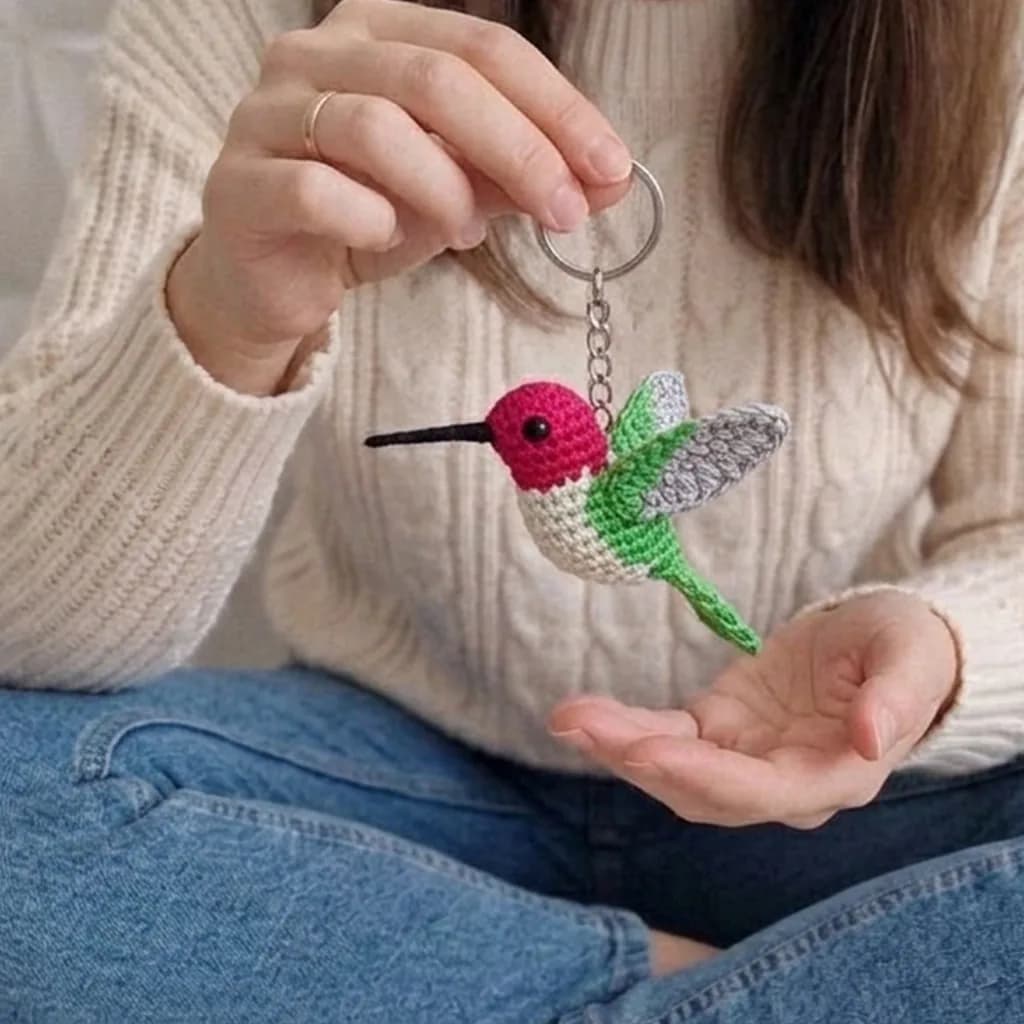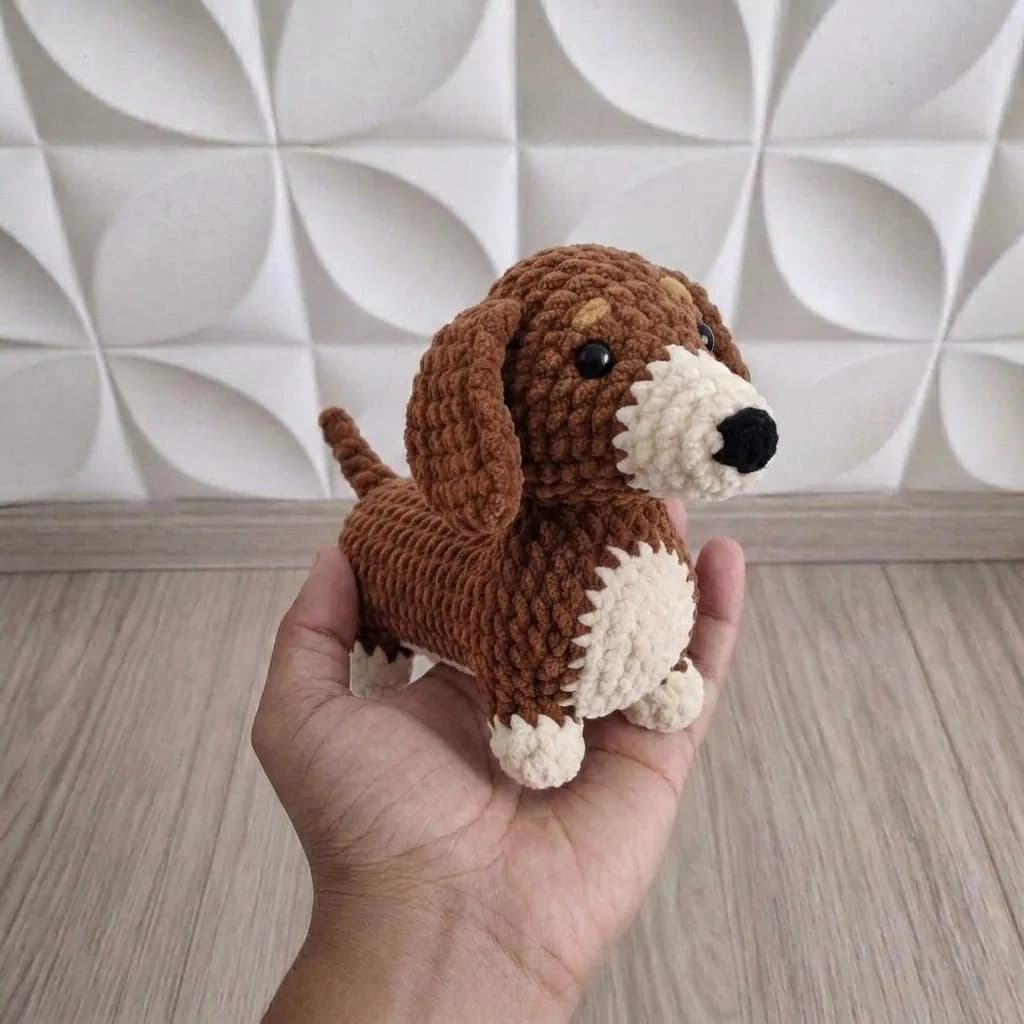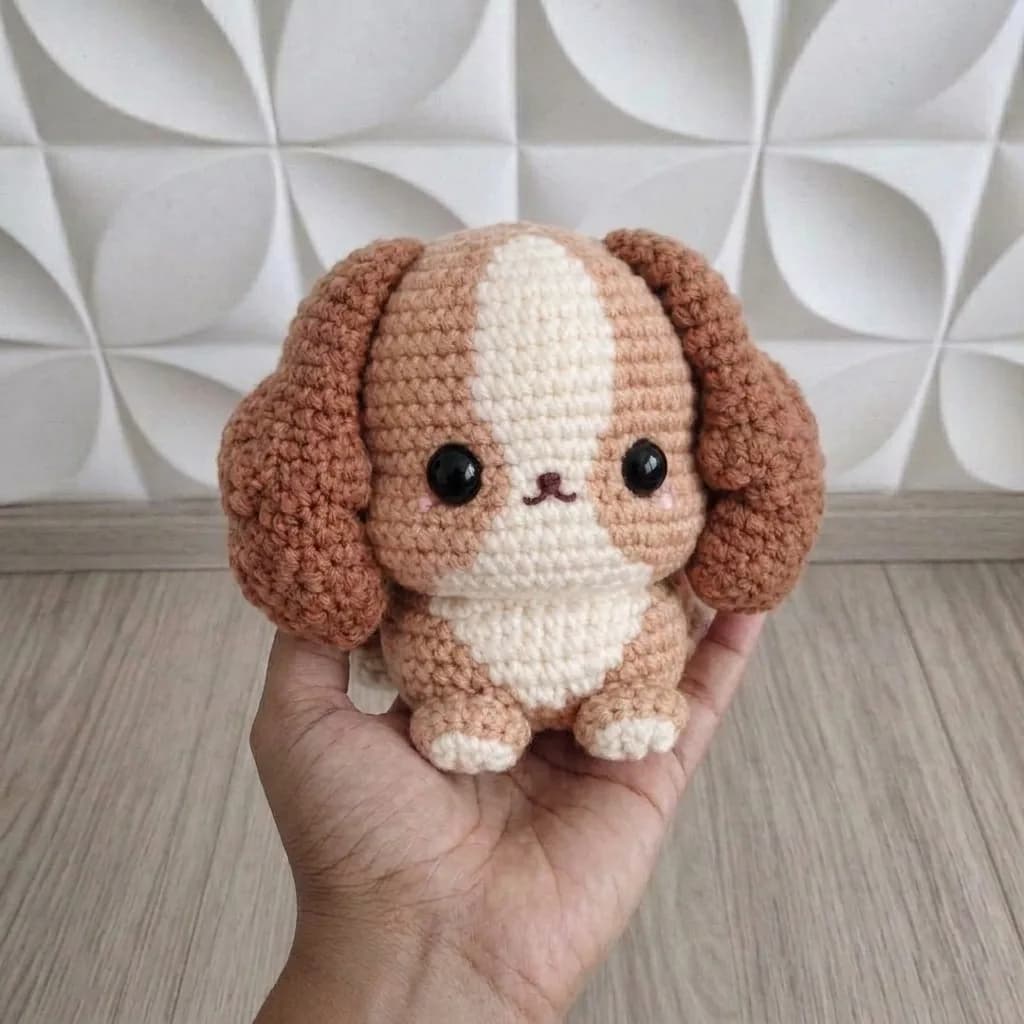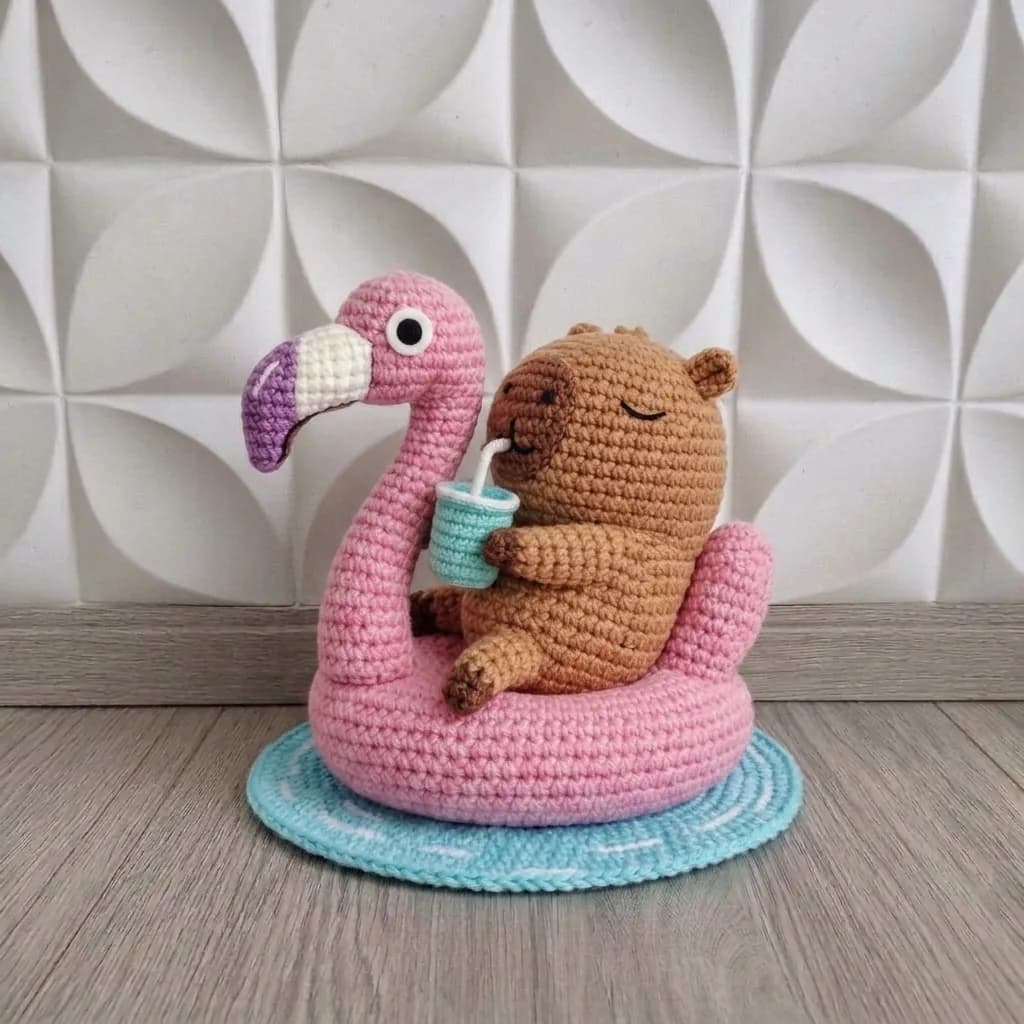
A wire armature in amigurumi is a bendable frame, usually of pipe cleaners or craft wire, placed inside the crocheted pieces so they hold a pose. It suits display pieces made for adults or older collectors. Wire can work loose and poke through, so leave it out of any toy meant for babies or young children.
Who an armature is for
Before you reach for the wire, decide who will own the finished piece. A posable figure on a shelf, a sculpture, a cake-topper style decoration or a collector piece are good candidates. A toy that a young child will chew, squeeze and drag around is not.
The concern is simple: wire is stiff and has ends. Over time, bending makes metal weaken and can break inside the toy, and an end can work its way through the stitches. Many toy-safety guidelines treat sharp points and small hard parts as hazards for young children. If a piece might end up in a child's hands, choose stuffing alone, or a different way of giving shape, and follow the toy-safety guidance where you live.
Pipe cleaners or craft wire?
| Material | Pros | Cons | Typical use |
|---|---|---|---|
| Pipe cleaners (chenille stems) | Soft fuzzy coating, grips stuffing, cheap | Thin wire, ends can be sharp, coating sheds | Thin tails, ears, small limbs |
| Aluminum craft wire | Bends well, holds a pose, does not rust | Weakens if bent repeatedly in one spot | Full figure frames, posable limbs |
| Galvanized or steel wire | Very firm | Hard to bend, can rust if wet, sharp cut ends | Large sculptures only |
| Plastic-coated wire | Ends sealed in plastic, will not rust | Coating can split | Antennae, whiskers, stems |
For most posable amigurumi, a medium aluminum wire is a common choice because it bends by hand and holds its shape. Use pliers for the tight bends.
How to build a simple armature
1. Plan the shape on paper
Draw the figure at actual size and mark where the wire should run: through the legs, along the spine, into the arms and neck. Keep wire away from places you will sew through often, such as the face.
2. Cut and fold the ends back
Cut each wire a little longer than needed. Then use round-nose pliers to fold every end back on itself into a small closed loop. A folded loop has no point, and it also stops the wire from sliding through the stuffing.
3. Join the sections
Twist wire pieces together where limbs meet the body, rather than relying on a single strand. Two strands twisted together are stiffer and less likely to break at a joint.
4. Pad and wrap
Wrap the whole frame with a layer of stuffing or a strip of felt, then wrap yarn tightly over the padding to hold it. Padding keeps the wire centered in the crocheted tube, so the metal does not rub against the stitches from the inside.
5. Insert as you stuff
Slide each wire limb into its crocheted piece before you close it, stuffing around the frame as you go. Fill evenly so the wire sits in the middle. Close the pieces and sew them together around the frame.
Sizing the frame to the piece
The frame should be smaller than the crocheted shell in every direction, so there is room for padding all around it. As a rule of thumb, stop each wire limb short of the tip of the crocheted limb, leaving space for a tuft of stuffing at the end. Hands and feet get their shape from stuffing and stitches, not from the wire. For thin tubes, such as a tail made of a few stitches around, a single pipe cleaner may already fill the space; in that case skip the extra padding but still fold the ends.
Test the stiffness before you commit. Bend the wrapped frame into the pose you want and let go. If a limb slowly sinks, it needs a second strand; if you struggle to bend it by hand, it is too heavy for a small figure.
Pipe cleaners in small parts
Pipe cleaners are handy for single parts: a tail that curls, ears that stand up or a long neck. Fold both ends back so the wire tip is covered, and twist two stems together for more strength. Slide the stem into the crocheted tube and add a little stuffing around it.
Stand-up figures and balance
A wire frame helps a figure stand on two legs, but only if the weight sits over the feet. Running wire down through each leg and bending a small flat loop inside each foot gives a base to stand on. For larger figures, you can anchor the feet to a small wooden base, which turns the piece clearly into a display item. For toys without wire, our guide on how to make amigurumi stand up covers weighted bases and flat feet.
Alternatives when the toy is for a child
If you want movement without wire, consider:
- Thread-jointed limbs, which swing on a strong thread through the body. Our guide to movable arms and legs explains the method and its limits.
- Firm stuffing in tails and ears, which holds a soft curve without any frame.
- Shaping with stitches, such as short rows or decreases on one side, to bend a piece permanently.
These keep the toy soft all the way through.
Caring for a piece with wire inside
Do not put a wired figure in the washing machine, and avoid soaking it; steel wire can rust and stain the yarn, and water weakens some coatings. Spot-clean the surface with a damp cloth instead. Bend limbs gently and not repeatedly at the same point, because metal fatigue is what eventually snaps a wire. If you ever feel a sharp end through the fabric, open the piece and fix it rather than covering it.
Common problems with wired figures
| Problem | Likely cause | Fix |
|---|---|---|
| Limb droops after posing | Wire too thin for the length | Twist in a second strand or use thicker wire |
| Wire visible through stitches | Not enough padding | Add felt or stuffing around the frame |
| Figure tips over | Weight not over the feet | Bend a flat loop in each foot or add a base |
| Lumps along a limb | Stuffing bunched on one side | Stuff in small tufts around the wire |
Labeling the piece
If you give a wired figure as a gift, tell the recipient that it contains wire and is meant for display. A short note with the piece avoids it ending up as a child's toy by accident.
Browse our amigurumi PDF patterns for figures you can make soft, or adapt for display with a simple frame.