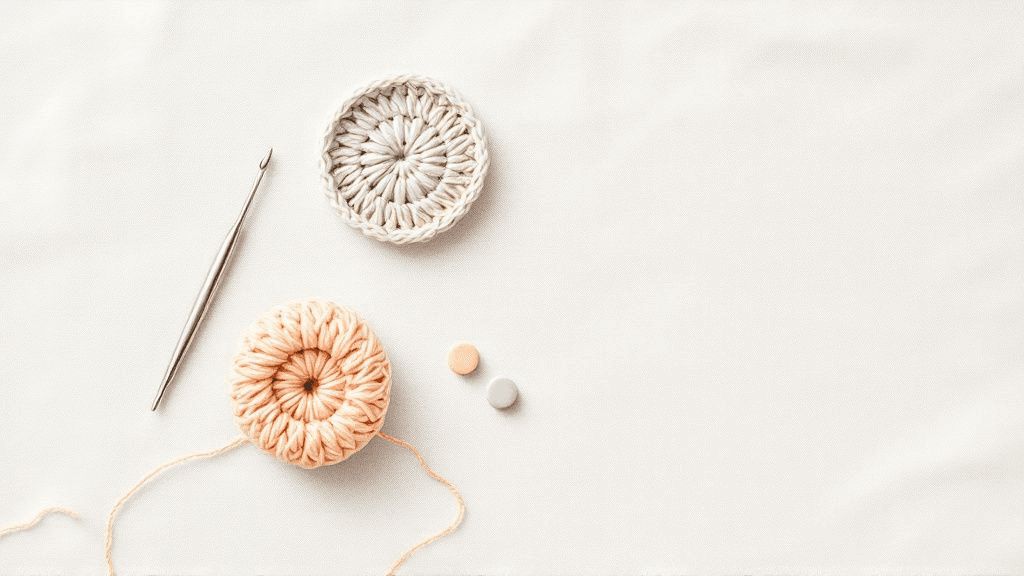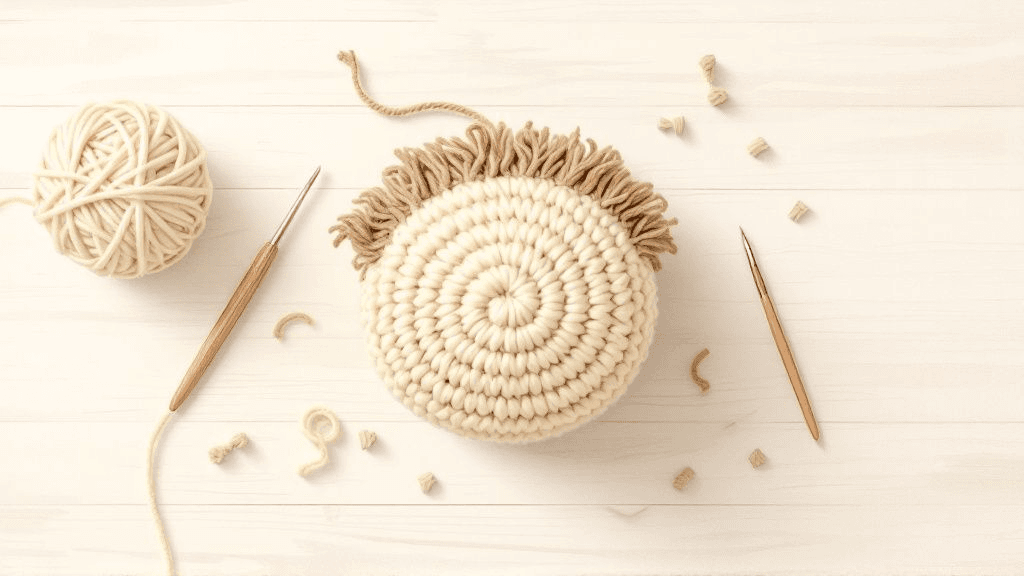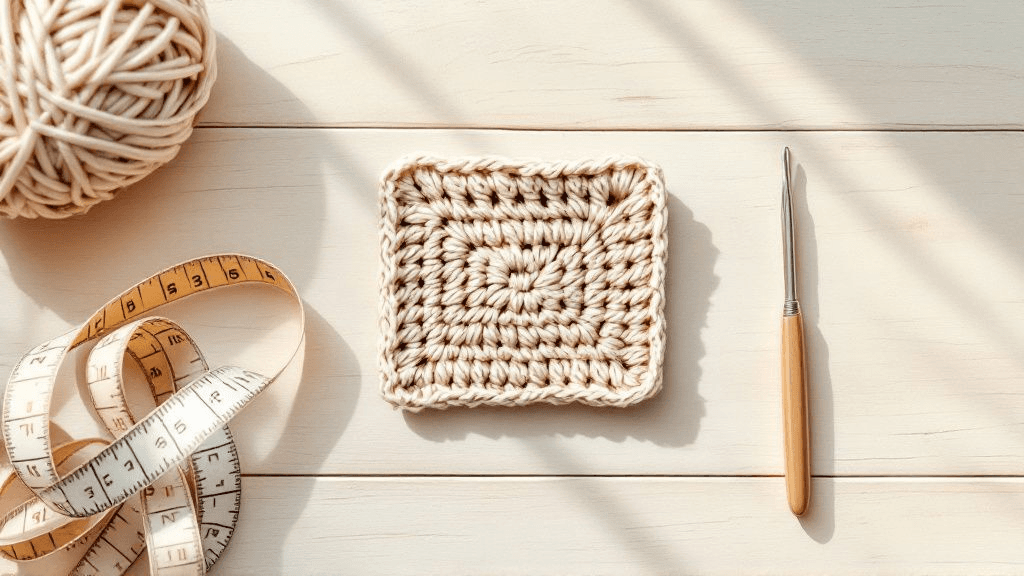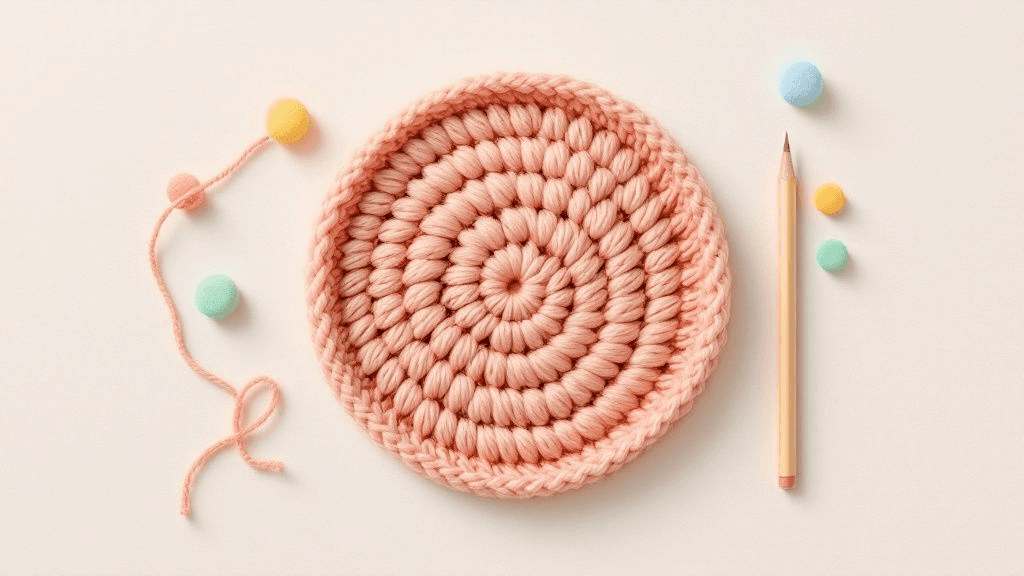
To count stitches in crochet rounds, look at the top edge of the round and count each sideways V, starting from the stitch with your marker and going around until you are back at the marker. Each V is one stitch. In an increase round, the two stitches made in one stitch count as two Vs.
Why counting matters so much in amigurumi
In a flat scarf, one extra stitch is barely visible. In a sphere, it shows. Amigurumi shapes depend on exact numbers: a head that should go 30, 36, 36, 36, 30 changes shape if one round ends with 35 or 37. And because each round is built on the last, a miscount carries forward and grows. Counting each round when you finish it is the habit that saves the most time.
What a stitch looks like from the top
Hold the piece so you are looking down at the last round you made. Along the edge you will see a chain of sideways V shapes, each made of two strands. One V is one stitch.
| What you see | What it is |
|---|---|
| Sideways V on the top edge | The top of one stitch, the one you count |
| Vertical post below the V | The body of the stitch |
| Small bump just behind the V | Part of the stitch, do not count it separately |
| Loop on your hook | Not a stitch yet, do not count it |
| Marker | Marks the first stitch of the round |
The loop on your hook is the most common source of off-by-one errors. It is not a stitch; do not count it.
How to count a round step by step
- Finish the round, stopping just before the marked stitch.
- Lay the piece on your lap so the top edge faces you.
- Start at the stitch with the marker and count it as one.
- Move around the edge, counting each V.
- Stop when you reach the stitch just before the marker.
- Compare your total with the number in brackets at the end of the round.
Counting from the outside of the piece is usually easier. If the stitches are hard to see, gently stretch the edge between your fingers, or count with the tip of a tapestry needle so you touch each V once.
Counting in groups
For larger rounds, count in the same groups as the instruction. If the round is "(4 sc, inc) x 6", each repeat makes 6 stitches. Count six, then place a spare marker or pin, then count the next six. When you have six groups, you have 36. Checking six small groups is simpler than to count to 36 without losing track.
Increase stitches also stand out in a fresh round: two Vs coming out of one stitch below. Counting the increases is a handy way to check you have the right number of repeats, even before you count every stitch.
Using a marker the right way
A stitch marker is only useful if it moves with you. At the start of each round, take it out of the first stitch of the previous round and put it into the first stitch you make in the new round. If you are unsure how to place it, our guide to using stitch markers covers this in detail.
Some makers use a long strand of contrasting yarn instead, weaving it between rounds as a lifeline. It shows the start of every round at once, which helps when you go back to look for an error.
When the count is wrong
First, recount. Many "wrong" counts are counting errors, not crochet errors. If the second count agrees with the first, the round really has the wrong number.
One stitch too many
Common causes:
- Working into the first stitch twice, once at the start and once at the end.
- An increase where the pattern said single crochet.
- Counting the loop on the hook.
One stitch too few
Common causes:
- Missing the first stitch of the round because the marker hid it.
- Skipping the stitch right after an increase.
- An extra decrease, or a decrease where the pattern said single crochet.
Finding where it went wrong
Count the rounds below as well. If round 6 is wrong, check round 5. If round 5 is correct, the problem is in round 6 itself. Look along the round for two Vs that come out of one stitch where there should be one, or for a space where a stitch was skipped.
In an increase round, the increases should be evenly spaced. If two increases sit closer together than the others, or one group is longer, that is where the error is.
Fixing it
You have three choices:
- Undo back to the error. Pull the hook out and gently unravel until you reach the wrong stitch, then redo it. This is the cleanest fix. Our guide to fixing crochet mistakes explains how to unravel and pick up the stitches again without dropping any.
- Correct it in the next round. If you have one stitch too many in an even round, work one decrease in the next round; if you have one too few, work one extra increase. On a stuffed sphere this is almost invisible.
- Leave it. On a small piece, a single stitch difference in an even round rarely shows. But do not leave errors in increase or decrease rounds, because they change the shape.
Counting in dark or fuzzy yarn
Dark and textured yarns hide the Vs. A few things help:
- Work in good light, ideally daylight or a bright lamp.
- Place a sheet of white paper behind the edge you are counting.
- Use a lighter-colored marker in every few stitches.
- Run a finger along the edge; you can often feel the bumps of each V.
A habit worth building
After every round, count, then write a tick next to the round in the pattern or tap it in your PDF reader. If you stop mid-round, put a second marker in the last stitch you made. These two habits mean you always know where you are when you pick the work up again.
With counting under control, any pattern in our amigurumi PDF collection becomes a series of small, checkable steps.