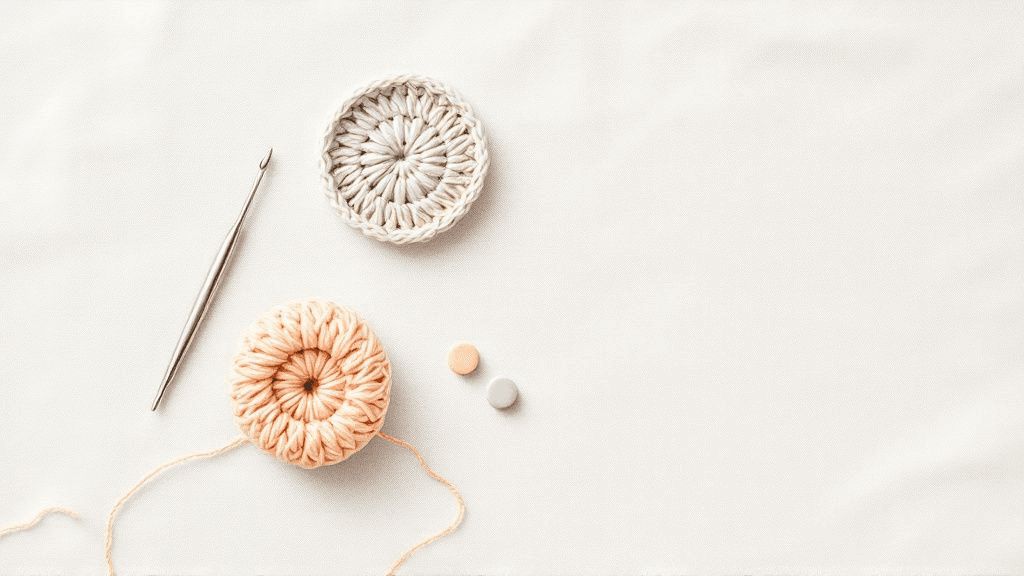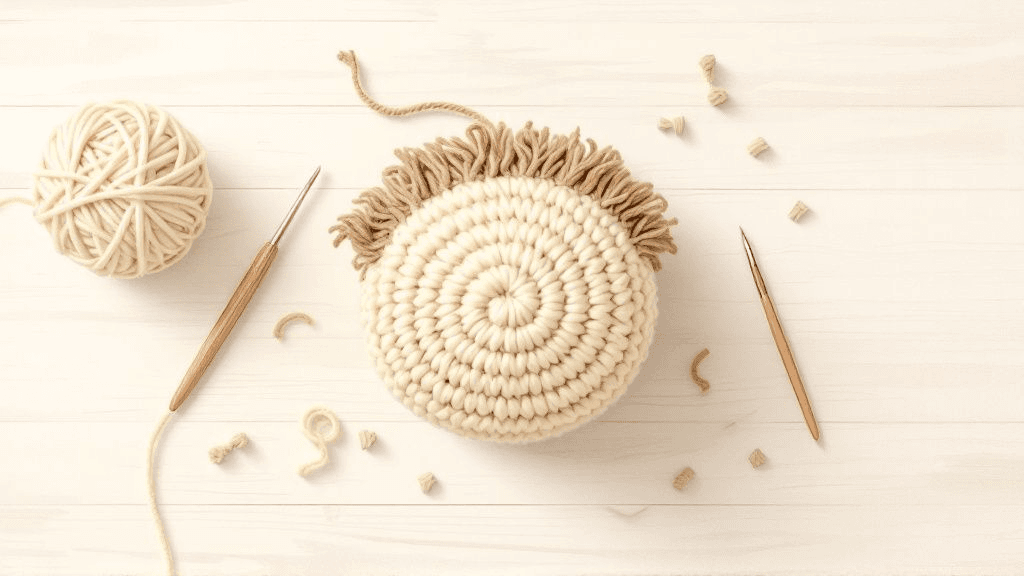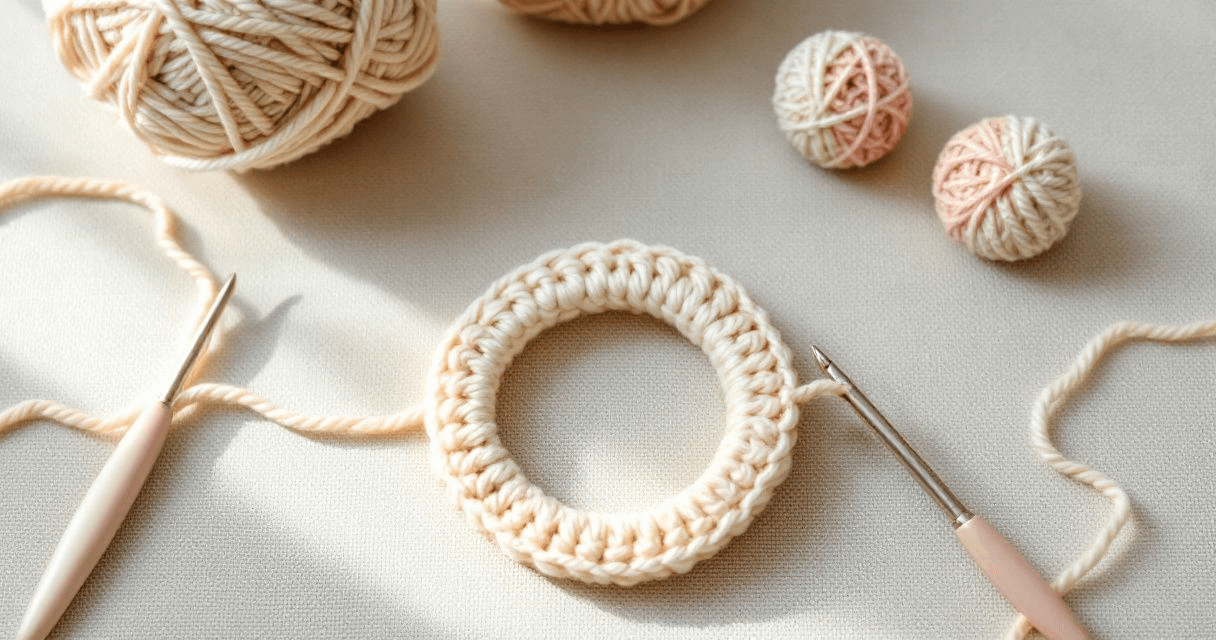
To make a magic ring, wrap the yarn around two fingers so the working yarn crosses over the tail, insert the hook under the strands, pull up a loop and chain 1. Work six single crochets into the ring, over both strands, then pull the tail to close the centre. There is no slip knot at the start.
What the magic ring is and why amigurumi starts with it
The magic ring, also called the magic circle or adjustable ring, is a loop of yarn that you crochet the first round into and then pull shut. Because the loop tightens down to nothing, the centre of the piece closes completely. That matters for toys: a hole at the top of a head or the end of an arm lets the stuffing show. Most amigurumi patterns begin with it, often written as "MR" or "Rnd 1: 6 sc in a magic ring (6)".
Step by step: wrap, pull up a loop, chain 1, 6 sc, pull closed
These steps are for right-handed crocheters; left-handers work the mirror image.
- Make the loop. Leave a tail of about 10 to 15 cm. Lay the tail across the palm of your left hand and wrap the working yarn (the end that leads to the ball) around your index and middle fingers so it crosses over the tail and forms an X on the back of your fingers. Hold the crossing point with your thumb. Do not make a slip knot: a knot would stop the ring from closing.
- Pull up a loop. Insert the hook under both strands of the loop on your fingers, catch the working yarn and pull it back through under the strands. You now have one loop on the hook.
- Chain 1. Yarn over and pull through the loop on your hook. This chain holds the loop in place and does not count as a stitch.
- Work the first round. Insert the hook into the centre of the ring so that you go under both the loop and the tail, yarn over, pull up a loop, yarn over and pull through both loops on the hook. That is one single crochet. Make six in total, or the number your pattern asks for.
- Slide it off and close. Slip the ring off your fingers, hold the stitches and pull the tail gently. The ring shrinks and the stitches gather into a small circle. Keep pulling until the centre hole closes.
- Carry on. Place a stitch marker in the first stitch and work round 2 into the stitches you just made. Unless your pattern says to join, work in a continuous spiral without a slip stitch.
Securing the tail so the ring does not open
A magic ring is held shut by friction, so a tail that is not secured can slowly work loose as the toy is stuffed and played with. To stop that:
- Leave the tail hanging on the wrong side (the inside of the piece) while you work the next few rounds.
- Before you stuff, pull the tail tight once more, then thread it on a tapestry needle.
- Weave it through the back of the first round's stitches in one direction, then back in the other direction. Changing direction locks it in place.
- Trim the end, leaving a little inside the piece. The stuffing will hide it.
Avoid cutting the tail short straight after closing the ring. Without enough tail to weave, there is nothing to stop the ring from opening.
Alternative: chain 2 start
If the magic ring keeps slipping out of your fingers, a chain start gives a similar result with a little more of a centre hole.
- Chain 2.
- Work 6 single crochets into the second chain from the hook (the first chain you made).
- Carry on with round 2 as the pattern says.
The chain start cannot be pulled completely shut, so the centre may show a small gap. On a toy, place that end where it will be hidden, such as the bottom of a body or the end of an arm that is sewn on.
Troubleshooting a hole in the middle
- You worked into the loop only, not over the tail. The tail must sit inside every stitch of the first round, otherwise pulling it does nothing. Unravel and start again.
- The tail was not pulled firmly enough. Pull until the stitches gather tightly; a gentle tug is often not enough.
- The ring loosened later. The tail was trimmed before it was woven in. Use a needle to pull the tail tight again if you can reach it, or close the gap with a few small stitches from the inside.
- The stitch count is wrong. Count the stitches before you close the ring. It is much harder to add one after it is pulled tight.
Practise on a small toy
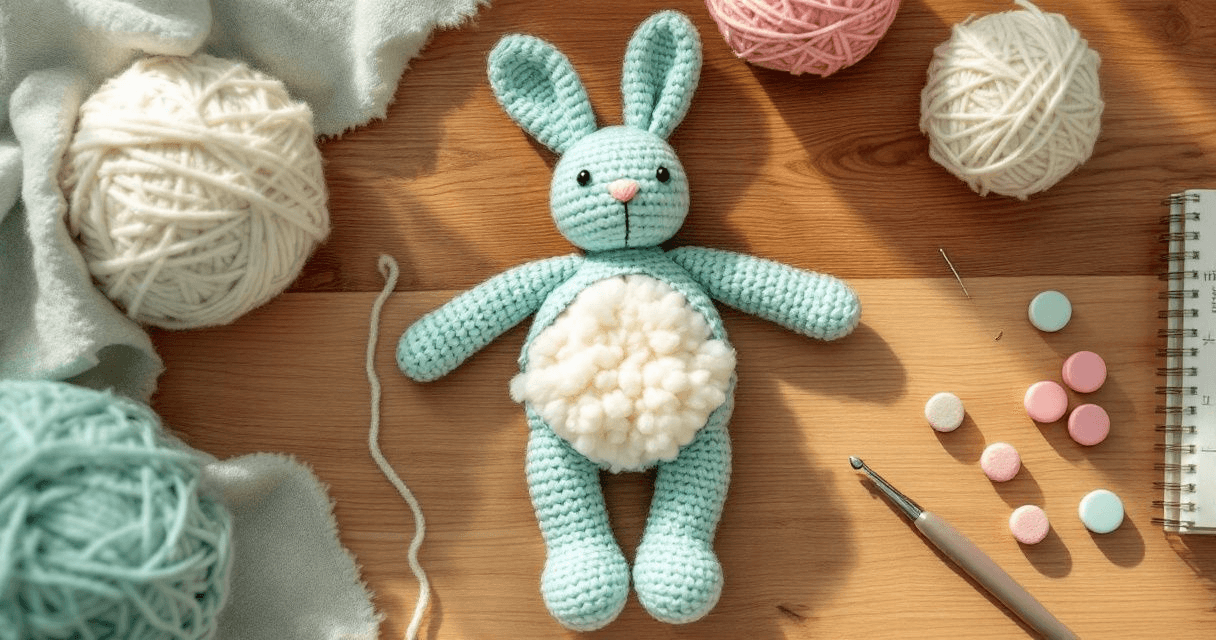
Every head, body and limb of a typical amigurumi starts with a magic ring, so a small toy gives you plenty of practice. A duckling like Eli the Duckling or a frog like Lily the Frog starts most of its parts this way, and the amigurumi pattern collection has more to choose from.