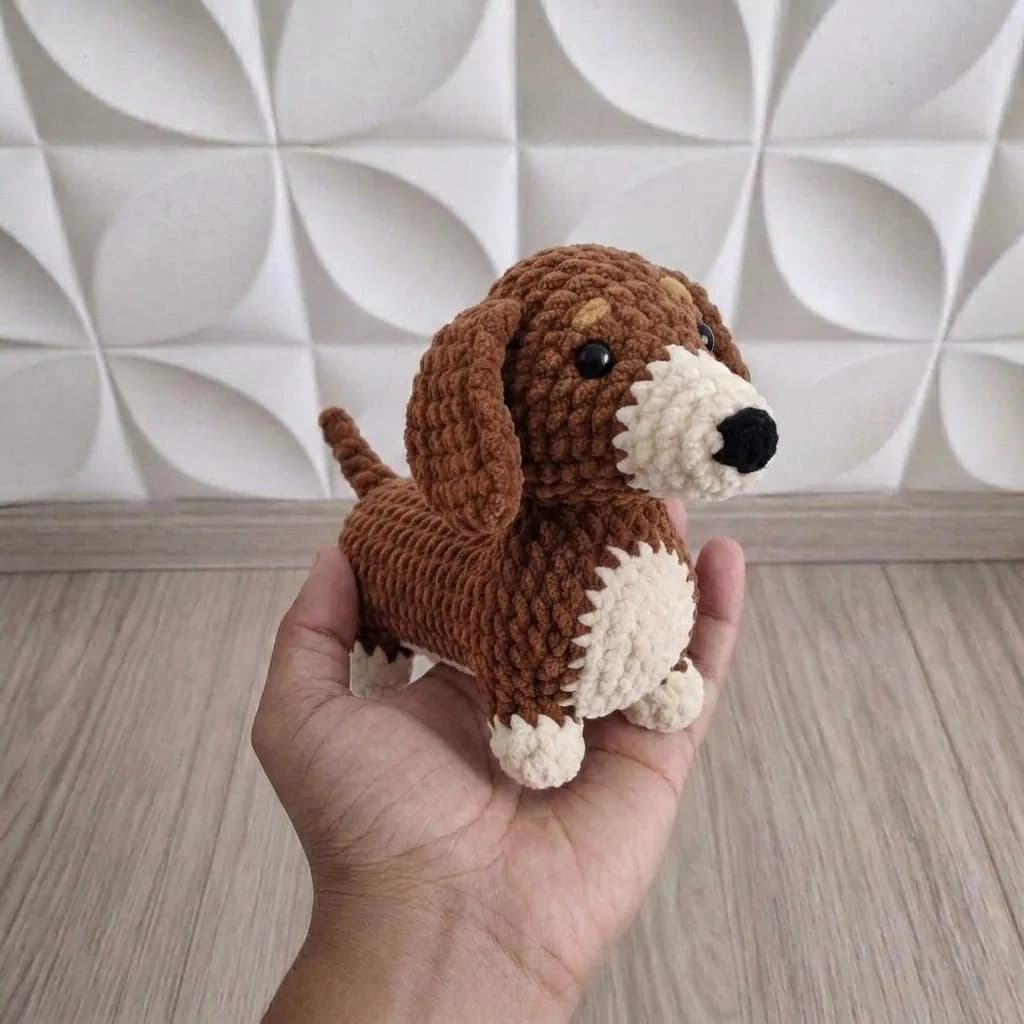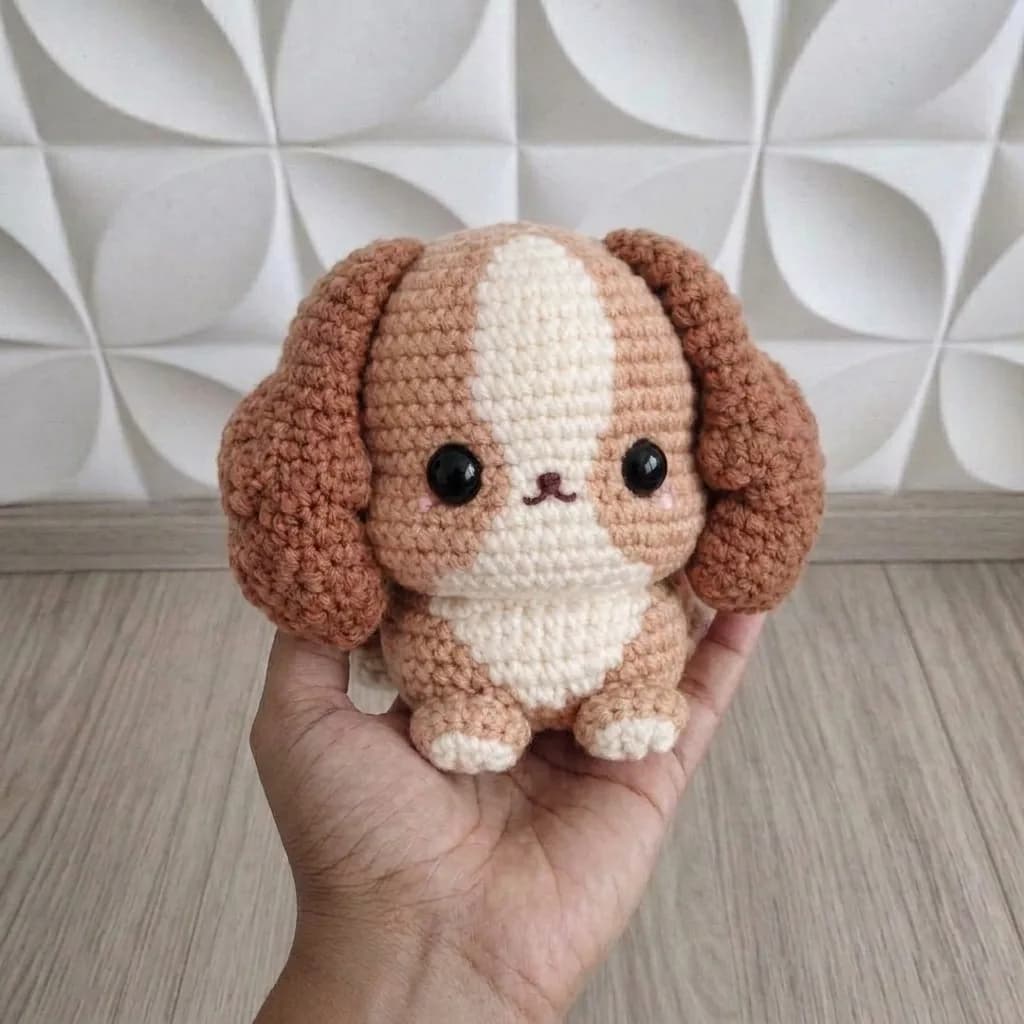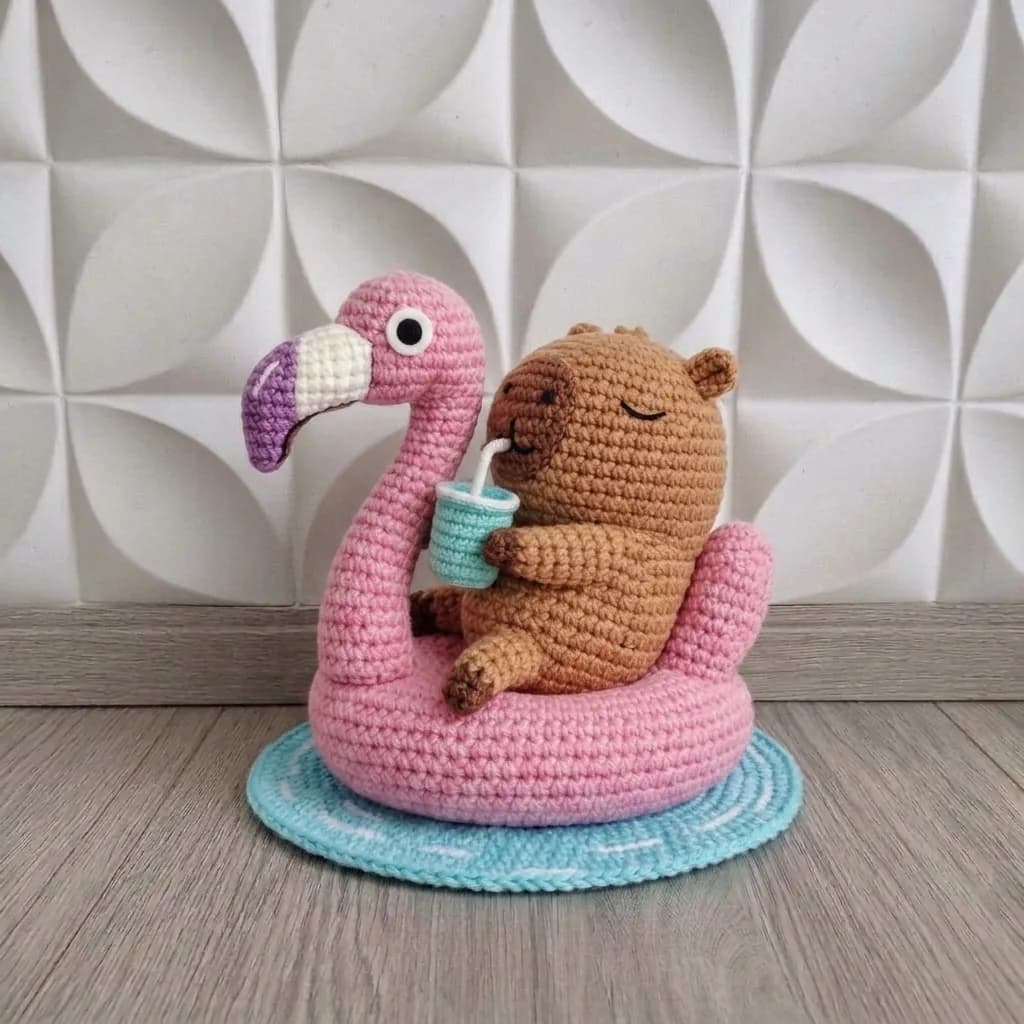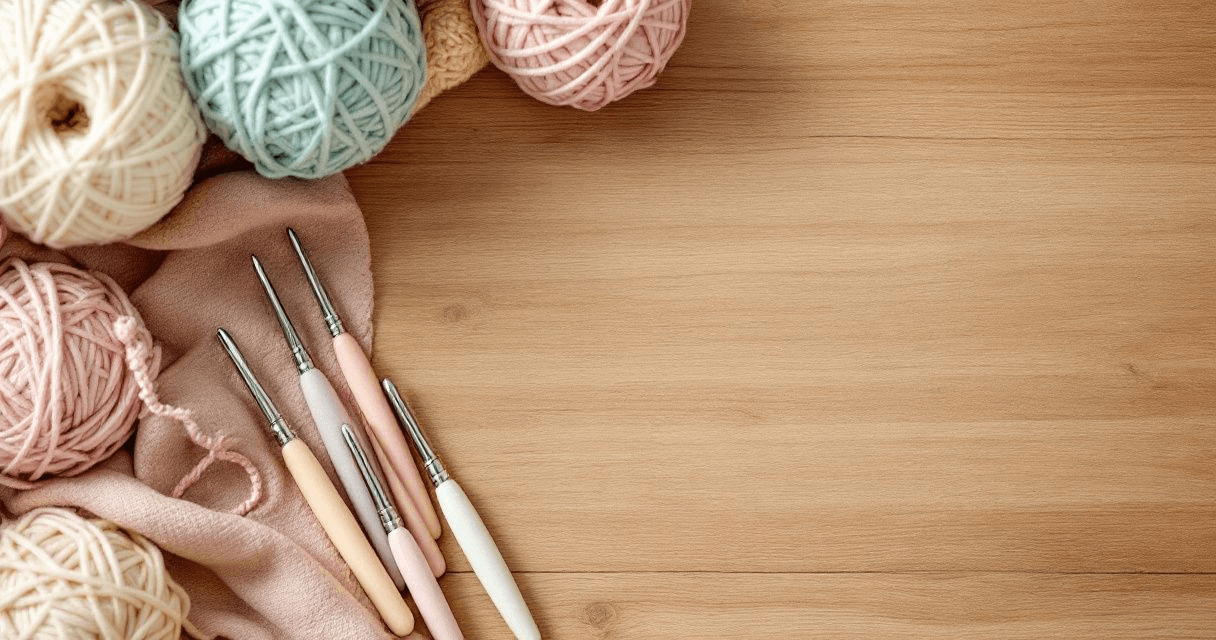
For amigurumi, most crocheters use a hook about 1 to 2 mm smaller than the range printed on the yarn label, so the stitches are tight enough to hide the stuffing. With DK yarn that usually means a 2.75 mm to 3.5 mm hook, and with worsted yarn a 3.5 mm to 4 mm hook. The chart below gives the mm and US sizes.
Why amigurumi uses a smaller hook than the yarn label suggests
The hook size on a yarn label is chosen for a standard fabric: a sweater, a scarf or a blanket, where some drape and air between the stitches is a good thing. The Craft Yarn Council's yarn weight guidelines, which many labels follow, suggest roughly 4.5 to 5.5 mm for DK yarn and 5.5 to 6.5 mm for worsted. Crochet a toy at that size and the fabric is open enough for the white fibrefill to show through.
A smaller hook packs the stitches closer together. That gives you:
- a dense fabric that hides the stuffing,
- a firmer shape that holds round heads and bodies,
- small, even stitches that make embroidered faces easier to place.
If a pattern names a hook size, start with that. The designer chose it with a particular yarn and tension in mind, and the finished size in the pattern depends on it.
Crochet hook size chart: mm and US sizes
The millimetre size is the diameter of the hook's shaft and is the number to trust. US letters and numbers are names, and brands do not always attach the same letter to the same size. In the UK and most of Europe hooks are now sold in millimetres; older UK hooks used a separate number scale where a higher number meant a smaller hook, so convert those through millimetres rather than letters.
| Millimetres | US size |
|---|---|
| 2.25 mm | B-1 |
| 2.5 mm | no standard letter |
| 2.75 mm | C-2 |
| 3.25 mm | D-3 |
| 3.5 mm | E-4 |
| 3.75 mm | F-5 |
| 4 mm | G-6 |
| 4.5 mm | 7 |
| 5 mm | H-8 |
| 5.5 mm | I-9 |
| 6 mm | J-10 |
| 6.5 mm | K-10½ |
Sizes follow the Craft Yarn Council's hook table. Sizes below 2.25 mm are usually steel hooks for crochet thread, which use their own numbering.
Matching hook to yarn weight for toys
These are common starting points for toys, not rules. Your own tension decides the final choice.
- Fingering or sock yarn (weight 1): around 2 to 2.5 mm, for small, detailed toys.
- Sport yarn (weight 2): around 2.5 to 3 mm.
- DK or light worsted (weight 3): around 2.75 to 3.5 mm. Many toy patterns are written for this weight.
- Worsted or aran (weight 4): around 3.5 to 4.5 mm.
- Chunky and plush or chenille yarns (weights 5 to 6): follow the pattern; these yarns are often worked at 4 to 6 mm because a very small hook makes them hard to pull through.
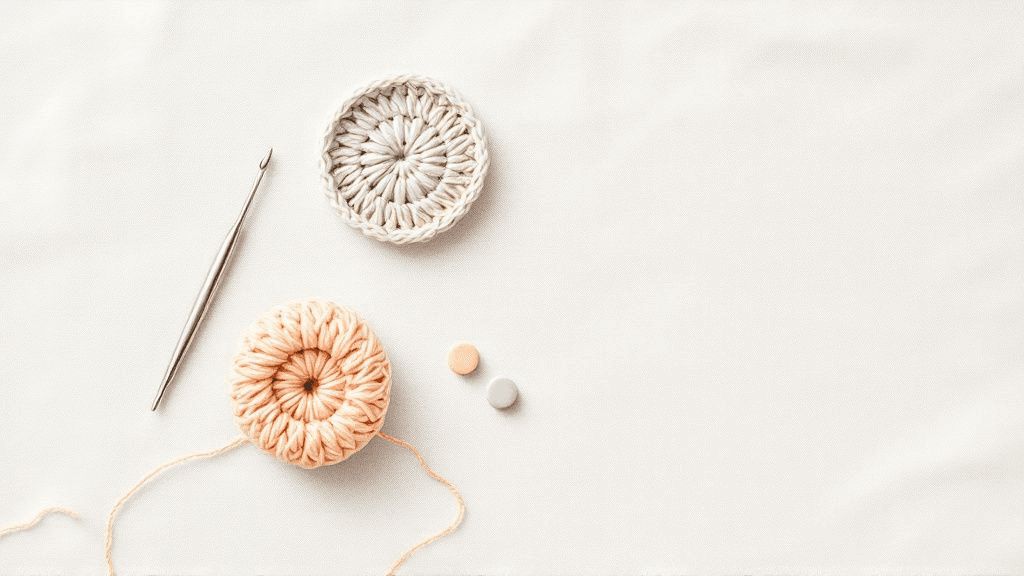
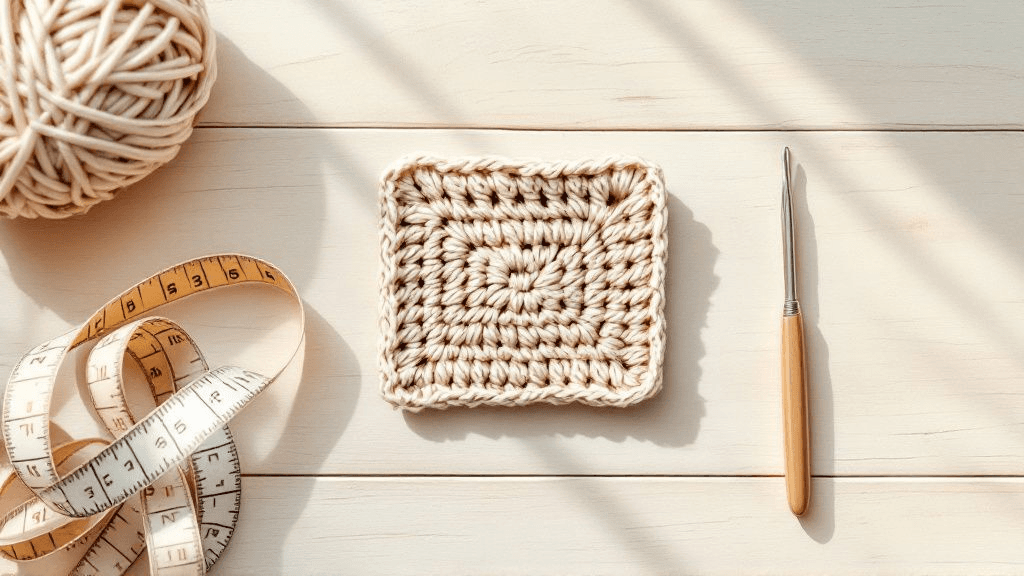
To test, crochet a small flat circle of five or six rounds and stretch it gently. If you can see light through the gaps, go down by 0.25 or 0.5 mm. If you are fighting to get the hook into each stitch, go up.
Signs your hook is too big (stuffing shows through)
- You can see fibrefill between the stitches once the piece is stuffed.
- The fabric stretches into a lumpy shape instead of a smooth curve.
- Gaps open up where increases and decreases sit.
- The piece comes out noticeably bigger than the size the pattern gives.
The opposite problem is real too. A hook that is too small makes your hand ache, splits the yarn and gives a stiff, board-like fabric. Somewhere between the two is the size that works for your hands.
Hook types: inline vs tapered, ergonomic handles
- Inline hooks have a head and throat about the same width as the shaft and a fairly pointed head. Some people find they give very even stitches.
- Tapered hooks narrow at the throat and have a rounder head, so loops slide off easily. Some people find them faster.
- Ergonomic handles are thicker grips made of rubber, silicone or wood. They help on long sessions, which is useful because toys use a lot of small, tight stitches.
Neither shape is better; it is a matter of feel. If you switch between them, check your fabric again, because the same millimetre size can crochet slightly tighter or looser in a different shape. Hook material matters a little as well: aluminium is smooth and quick, while bamboo and wood grip the yarn a bit more.
Putting it all together
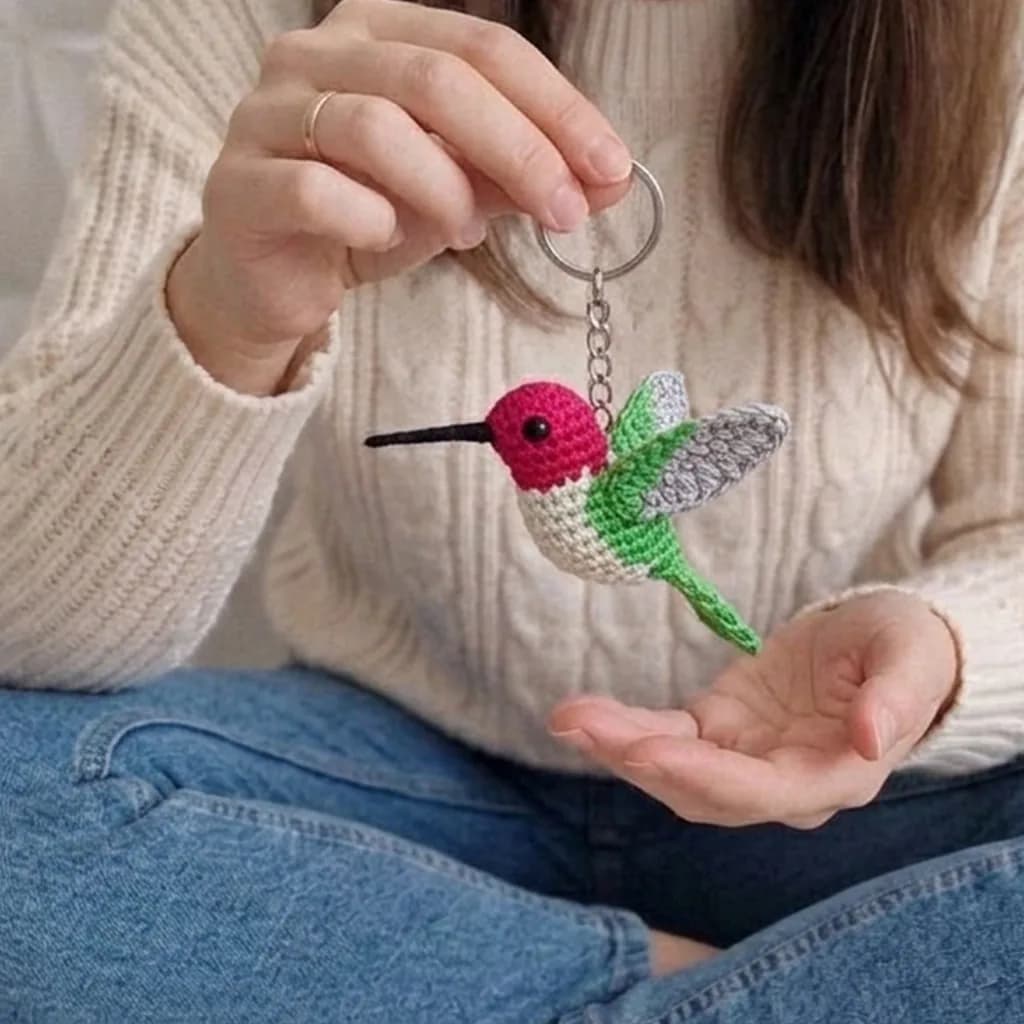
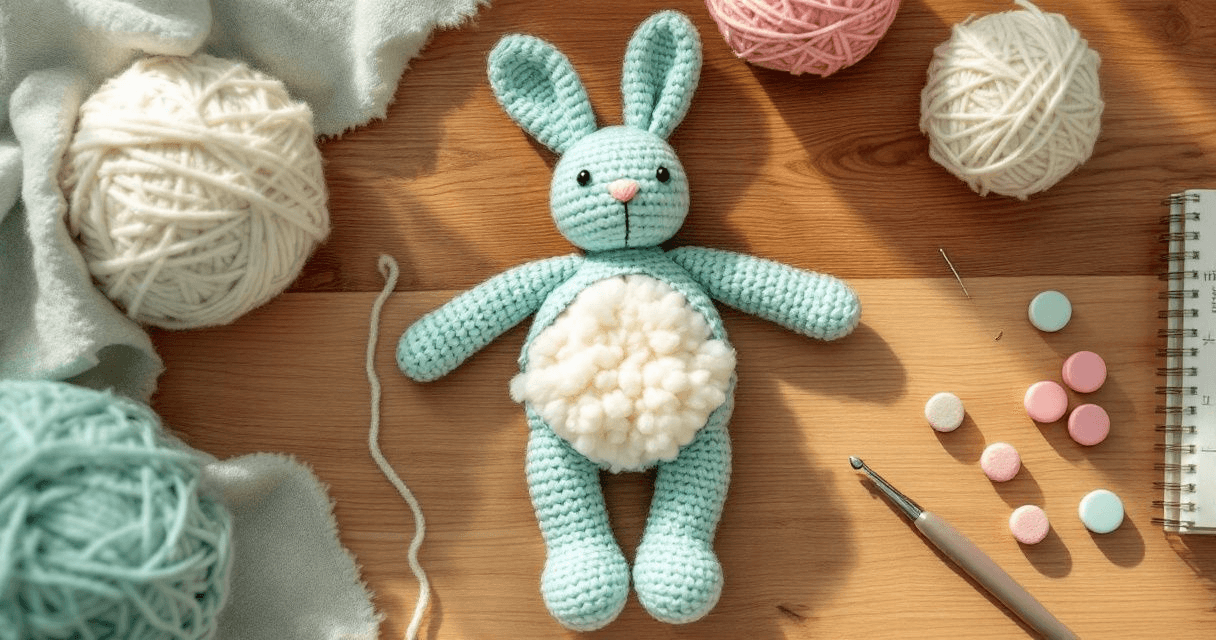
Start with the hook the pattern names. If it does not name one, take the yarn label range, go down 1 to 2 mm, crochet a test circle and adjust. Small toys such as the Ruby Hummingbird or Bella the Bunny are good ways to try a new hook before a bigger project, and the amigurumi pattern collection lists the rest.