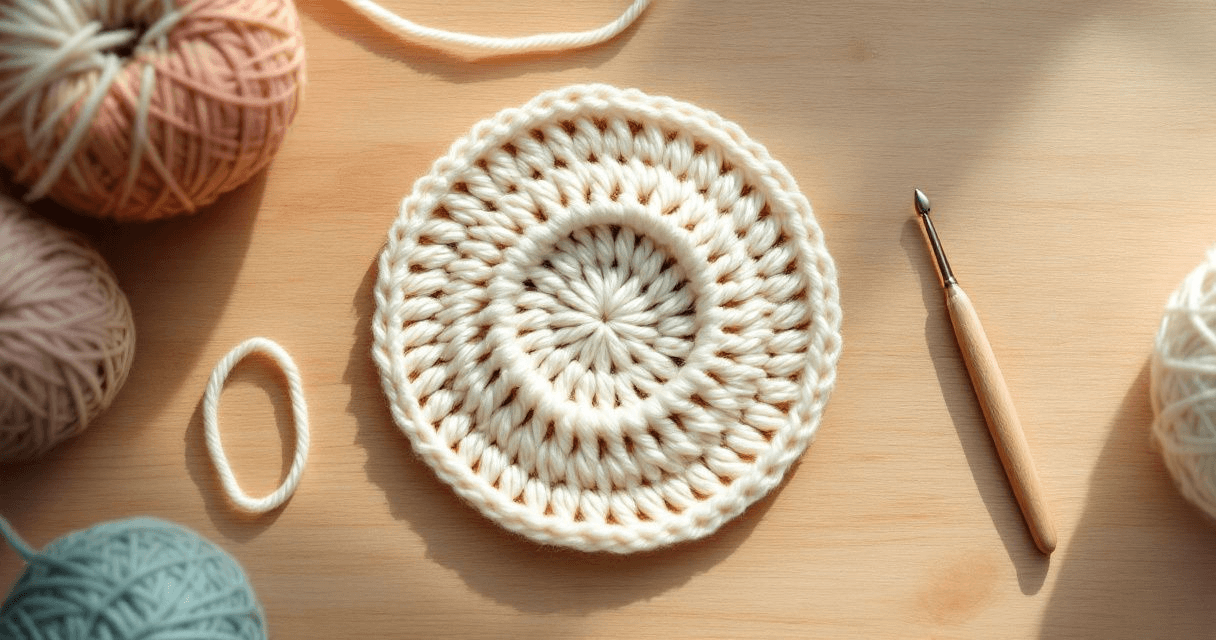
Cercle magique is French for magic circle — the adjustable loop used to start crochet in the round. You wrap the yarn, work your first stitches into the loop, then pull the tail tight. The centre closes with no gap, which is what amigurumi needs.
What "cercle magique" means in English patterns
Cercle magique is simply the French name for what English-language instructions call the magic ring, magic loop, or magic circle. In pattern notes you will often see it shortened to "MR" or written as "magic ring." It solves one specific problem: how to begin crocheting in a continuous spiral without leaving a hole at the centre.
The other common way to start in the round is a chain ring — you chain two to four stitches, join them into a ring with a slip stitch, then work into that ring. It works, and it is perfectly fine for many projects. But it always leaves a small opening in the middle.
In a flat circle, that opening does not matter much. In a stuffed toy, it does. The centre of a magic ring start is often the top of a head, the tip of a snout, or the base of a foot. If there is a hole there, stuffing can show through and the finished shape looks unfinished.
When to use a magic circle — and when a chain ring is fine
Use a magic circle when:
- You are starting an amigurumi piece worked in a continuous spiral.
- The centre of the piece needs to be closed, with no visible hole.
- You are making small rounded shapes — heads, limbs, ears, snouts.
- Your pattern says "6 sc in MR" or "work 6 single crochet into a magic ring."
A chain ring is a reasonable choice when:
- The centre will be covered later by a seam, a button, or another piece.
- You are working flat circles in joined rounds rather than a spiral.
- You are using a very slippery yarn and want a start that holds its shape on its own.
Neither method is "better." They just do different jobs. Once you know both, you can follow almost any pattern without guessing.
How to make a magic circle, step by step
- Pull about 15 cm (6 in) of yarn from the ball and lay the tail across your palm, held down by your middle and ring fingers.
- Wrap the working yarn once around your index and middle fingers, crossing it over the strand that leads back to the ball. You now have a loop with a crossing point.
- Slide your hook under the front strand of the loop and pull up a loop of working yarn.
- Chain one to lock that loop in place. This chain is a securing stitch, not usually counted as a stitch in the round.
- Work your first round of stitches into the ring, going over both the loop and the tail together.
- Pull the tail firmly to close the centre.
If you are left-handed, the steps are the same — just mirror the direction you wrap and hold everything the way that feels natural. The mechanics do not change.
Working the first round into the ring
Most amigurumi patterns begin with six single crochet into the ring. As you work those first stitches, keep them sitting side by side around the loop instead of letting them twist over each other. Twisted first stitches are the main reason a centre looks messy even after you pull the tail tight.
Do not count the securing chain as a stitch unless your pattern tells you to. If the pattern says "6 sc in MR," it means six single crochet, and nothing else.
You can work the first round over the tail as well as the loop. That hides the tail neatly and makes the centre slightly firmer, which is helpful on toys that will be stuffed and handled.
Closing the ring properly
Hold the stitches steady with one hand and pull the tail with the other. Pull evenly — a sharp yank can distort the first round. Then work your next round into the first stitch, continuing in a spiral as most amigurumi patterns do.
Do not cut the tail yet. You will weave it in later, and it is the tail that keeps the ring closed over time. Thread it onto a yarn needle, pass it through the base of the first round in a couple of directions, and trim.
If the centre still gapes
- Not pulled tight enough: tighten again after the second round, when the fabric has more grip.
- Slippery yarn: try wrapping the yarn twice around your fingers before working the first round. The extra wrap grips better.
- Hook too large: dropping one hook size for the starting round only often closes the gap.
- Too few stitches: if the loop is much wider than your stitch count, the ring will have slack in it no matter how hard you pull.
Where magic circles show up in real patterns
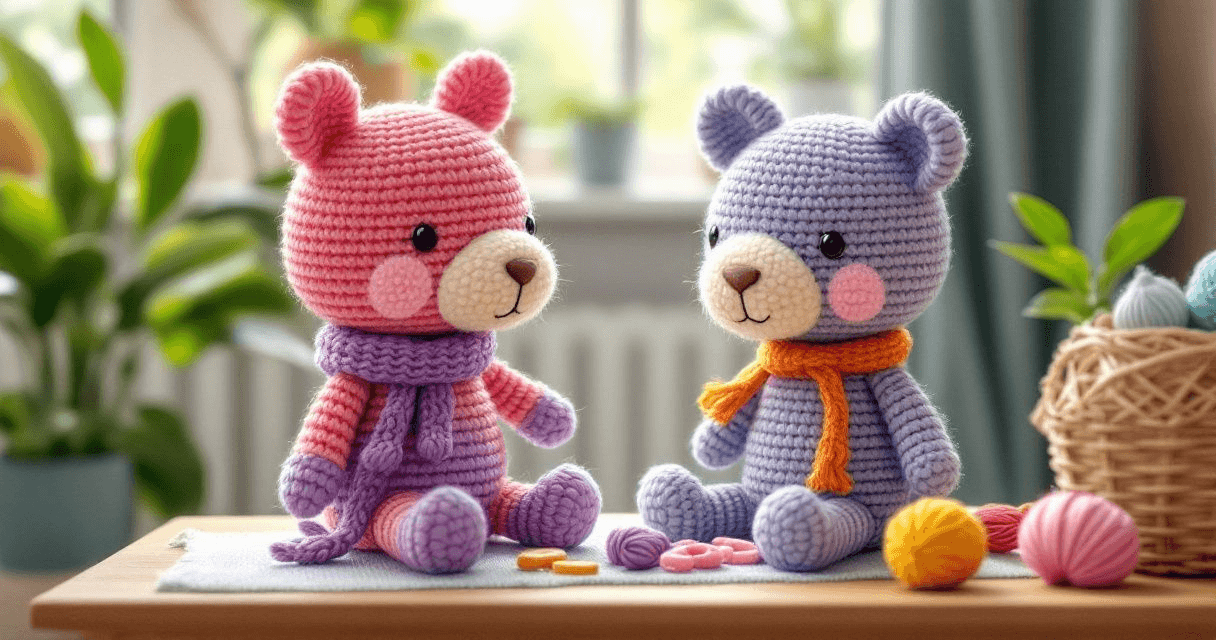
Almost every stuffed toy begins with one. Heads, bodies, arms, legs, ears, tails and snouts are usually started as a magic circle and then increased outward. Once you have made a handful, your hands start doing it without thinking.
If you want somewhere gentle to practise, a small single-piece project is ideal, like the Mimi Bunny plush crochet toy. If you would rather build up a set of shapes, the Magical Animal Friends crochet bundle gives you several animals to work through one at a time. And if you like having a big reference on hand while you learn, the Amigurumi Crochet Pattern Collection covers a wide range of projects that all start the same way.
A quick troubleshooting checklist
- Count your first round twice before moving on.
- Check that no stitches are twisted around the loop.
- Pull the tail again after round two.
- Weave the tail in firmly in two directions before trimming.
- If the hole is still visible, restart with a smaller hook and a longer tail — it takes two minutes.
Conclusion
Cercle magique, magic ring, magic loop — they all mean the same start. Wrap, work your first stitches into the loop, pull the tail, and carry on in a spiral. It takes a few tries to feel natural, and then it is just how you begin a toy. If your first attempt leaves a small hole, that is normal; tighten it after the next round or restart with a smaller hook. Either way, you will get there.
Frequently asked questions
Is cercle magique the same as a magic ring?
Yes. Cercle magique is the French term. In English patterns it appears as magic ring, magic loop, or magic circle, often shortened to "MR" in the pattern notes.
Can I use a magic circle for flat circles too?
Yes. It works for any round start, flat or stuffed. A chain ring is also fine for flat circles worked in joined rounds, so use whichever you find easier.
Why does my magic ring come undone later?
Usually because the tail was cut too short or not woven in. Leave a long tail, thread it onto a needle, and pass it through the base of the first round in a couple of directions before trimming.
Do I need a special hook for a magic circle?
No. Any hook you already use works. If your centre keeps gaping, try going down one hook size for the starting round only.
Does it matter which way I wrap the yarn?
Not for the finished result, as long as the loop closes when you pull the tail. Wrap in whichever direction feels comfortable, and left-handed crocheters simply mirror the steps.